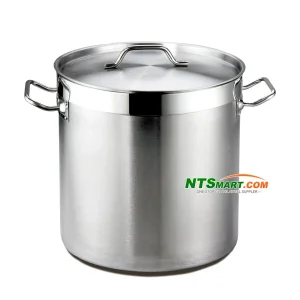
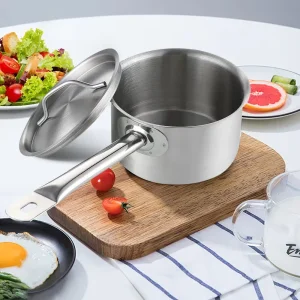
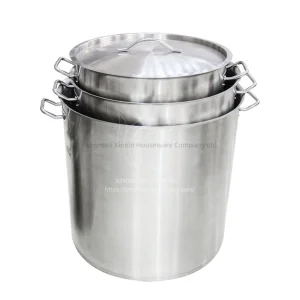
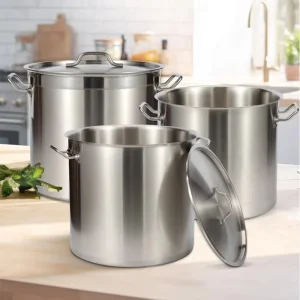
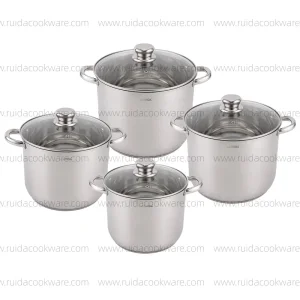
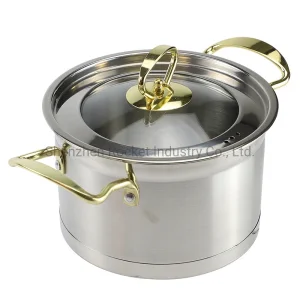
Engineered specifically to support the high thermal efficiency standards and compact workspace arrangements of commercial kitchens in Tokyo.
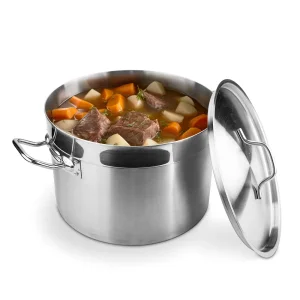
Tokyo's foodservice landscape is globally recognized for its uncompromising standards of precision, hygiene, and energy optimization. With space limitations in Ginza, Shinjuku, and Roppongi commercial kitchens, operators are increasingly replacing traditional open-flame burners with high-frequency induction heating (IH) ranges. This transition significantly lowers ambient temperatures and reduces air ventilation requirements, but places heavy physical demands on commercial cookware.
Furthermore, Japanese custom clearing operations enforce strict compliance with the Food Sanitation Act of Japan (食品衛生法), which governs heavy metals migration (such as lead, cadmium, and nickel release) from stainless steel alloys. Commercial cookware must withstand continuous exposure to high-sodium stocks, including pork-bone (Tonkotsu) and soy-sauce (Shoyu) bases, without experiencing localized pitting or stress corrosion cracking.
Located in the Chaoshan Plain of Shantou, Guangdong Province—a historic center of precision stainless steel manufacturing—we deliver custom OEM/ODM solutions to global B2B procurement markets.
Guangdong Kaus Kitchen Co., Ltd. is a modern, comprehensive enterprise integrating research and development, manufacturing, sales, and service, specializing in high-quality stainless steel kitchenware, hotel supplies, and household tableware products. Guided by the core business philosophy of "quality first, customer foremost," Kaus Kitchen is committed to delivering durable, safe, and innovative kitchen solutions to global customers.
The company has obtained ISO9001 International Quality Management System certification and ISO14001 Environmental Management System certification, ensuring strict standards in product quality control and sustainable production practices. In addition, several of its products have passed national safety and compliance certifications, including CCC certification for applicable electrical or regulated items.
Through continuous innovation and technological investment, Guangdong Kaus Kitchen Co., Ltd. has been awarded multiple honors such as "Guangdong Famous Brand Product" and "Guangdong Contract and Credit Enterprise," reflecting its strong reputation in both domestic and international markets. The company also holds a number of patents in product design and manufacturing processes, demonstrating its commitment to innovation and product differentiation.
With a modern production base covering approximately 30,000 square meters, the company operates in a well-planned garden-style industrial park featuring advanced manufacturing facilities, efficient logistics systems, and a comfortable office environment. A dedicated workforce of over 100 skilled employees ensures stable production capacity and consistent product quality.
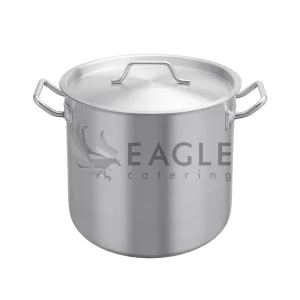
Every stockpot undergoes a rigorous, systematic manufacturing process monitored by our internal quality control department to ensure zero defects.
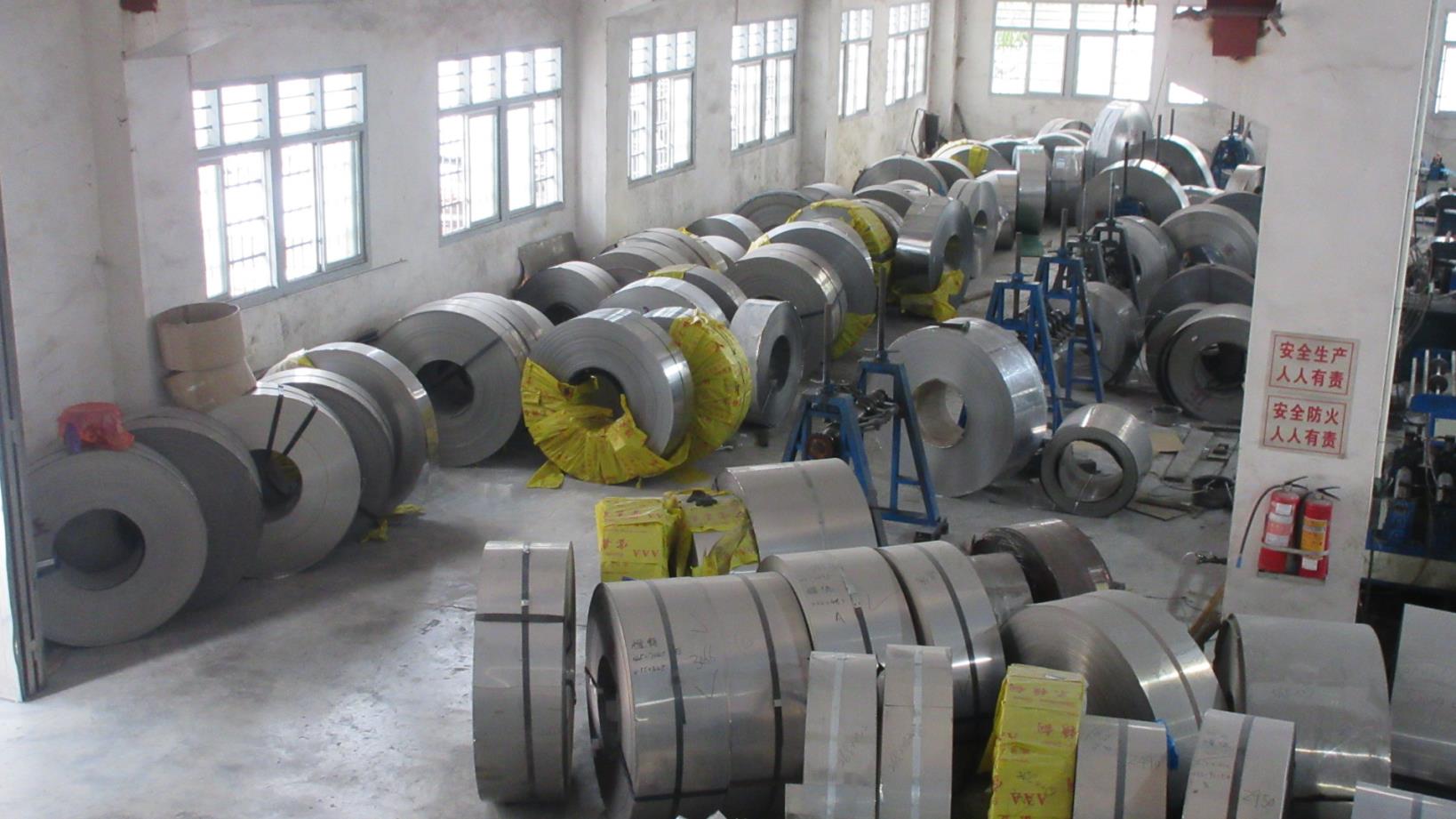
1. Raw Material
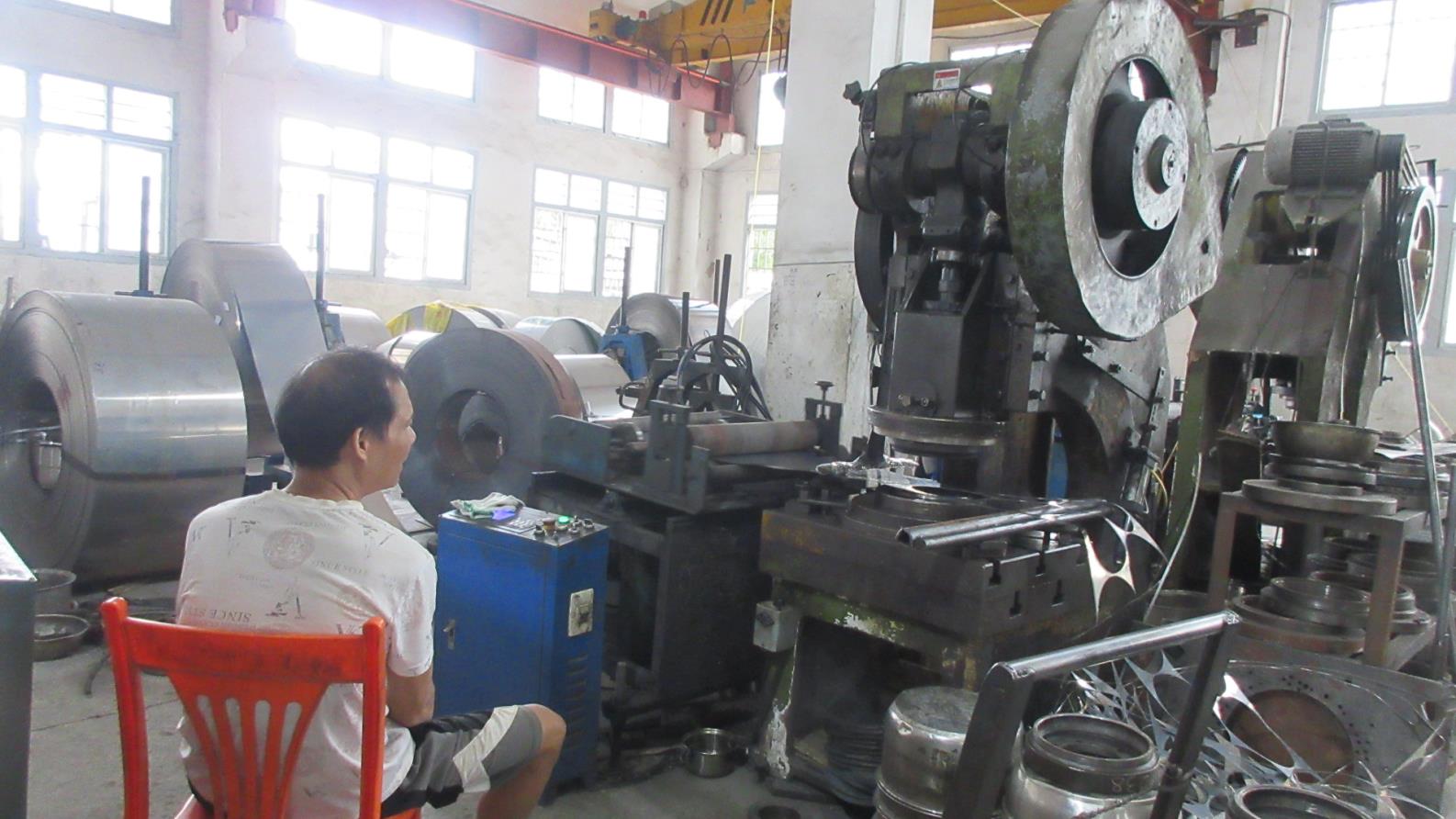
2. Cutting
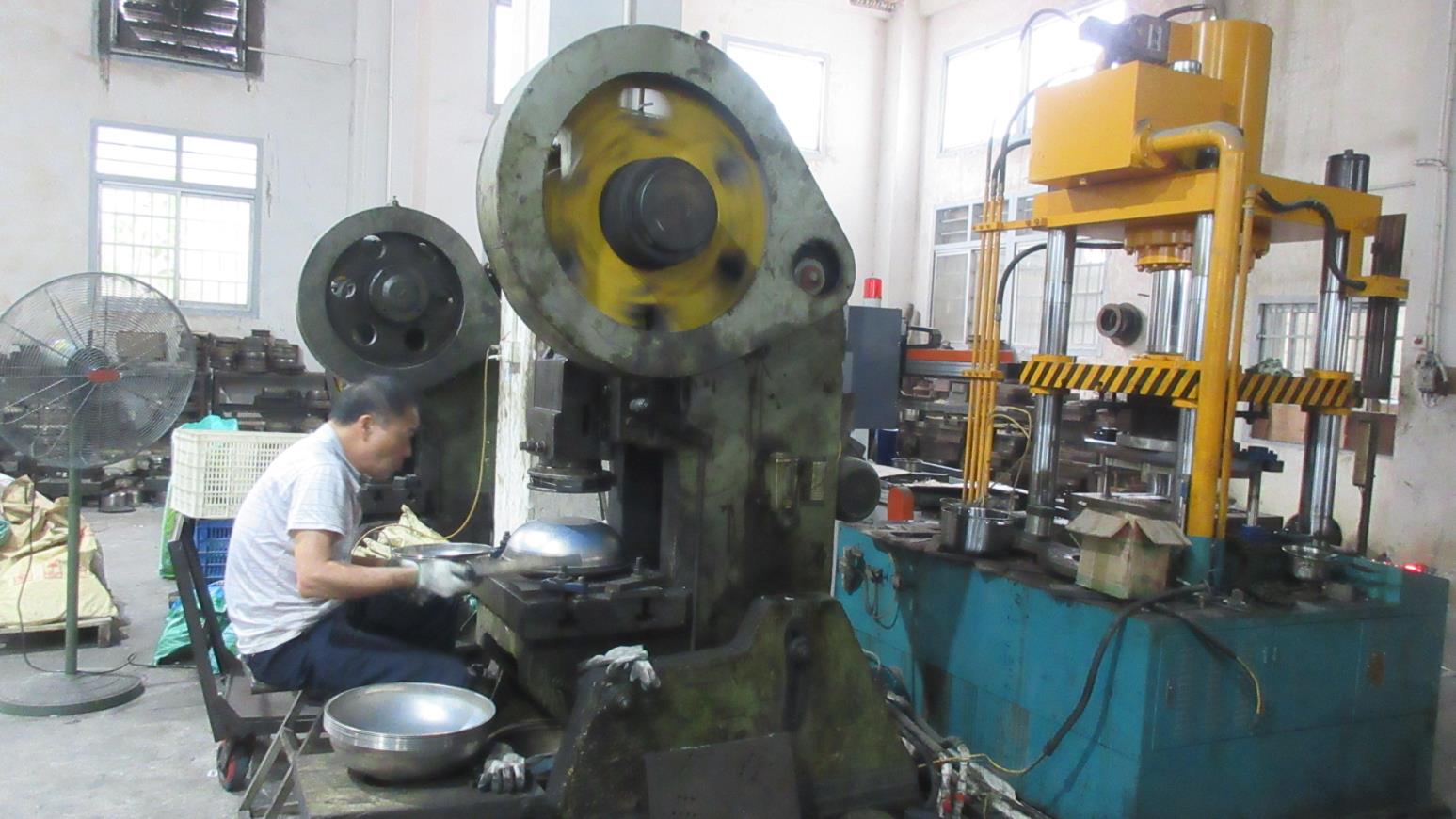
3. Pressing
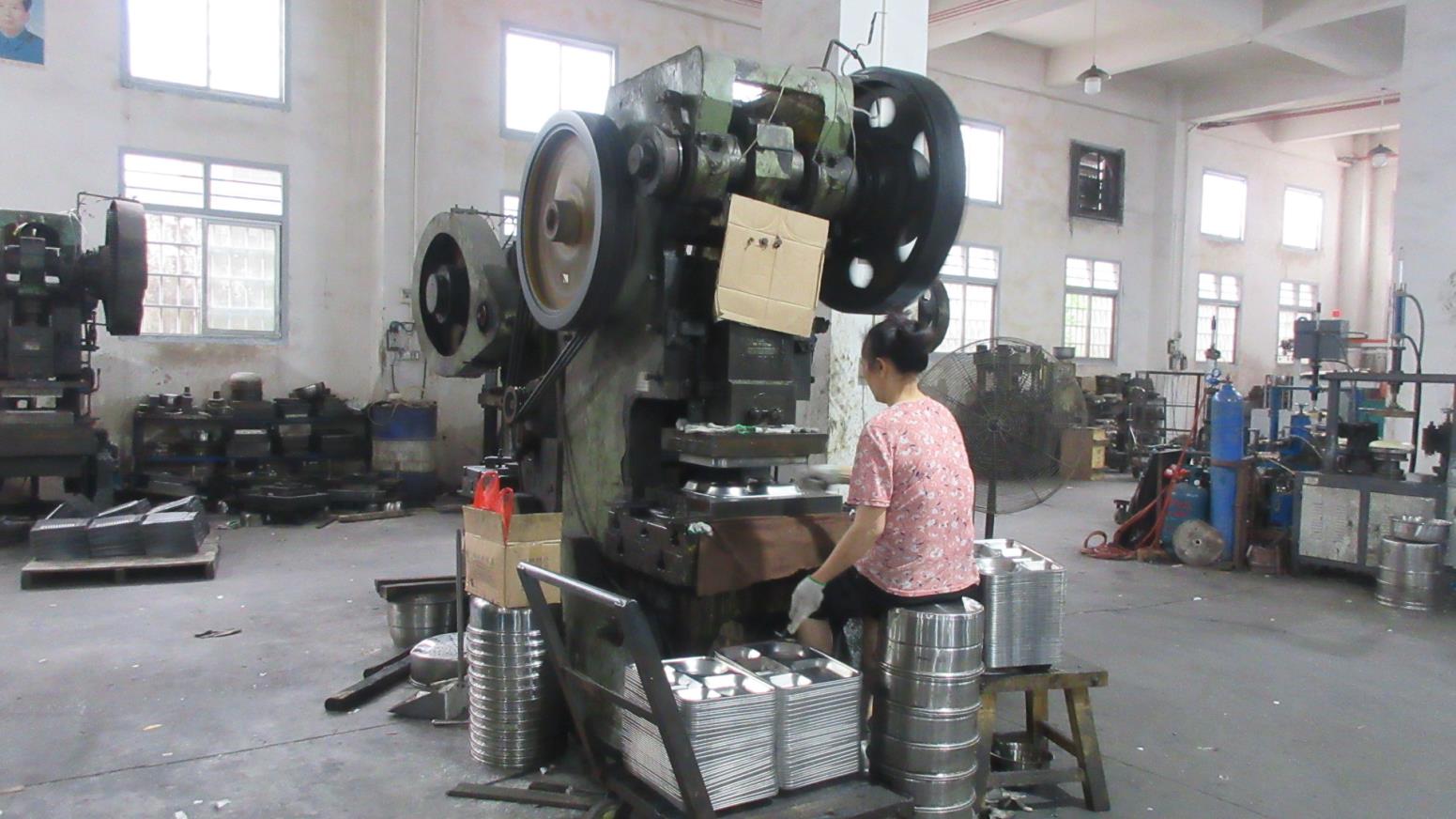
4. Casting
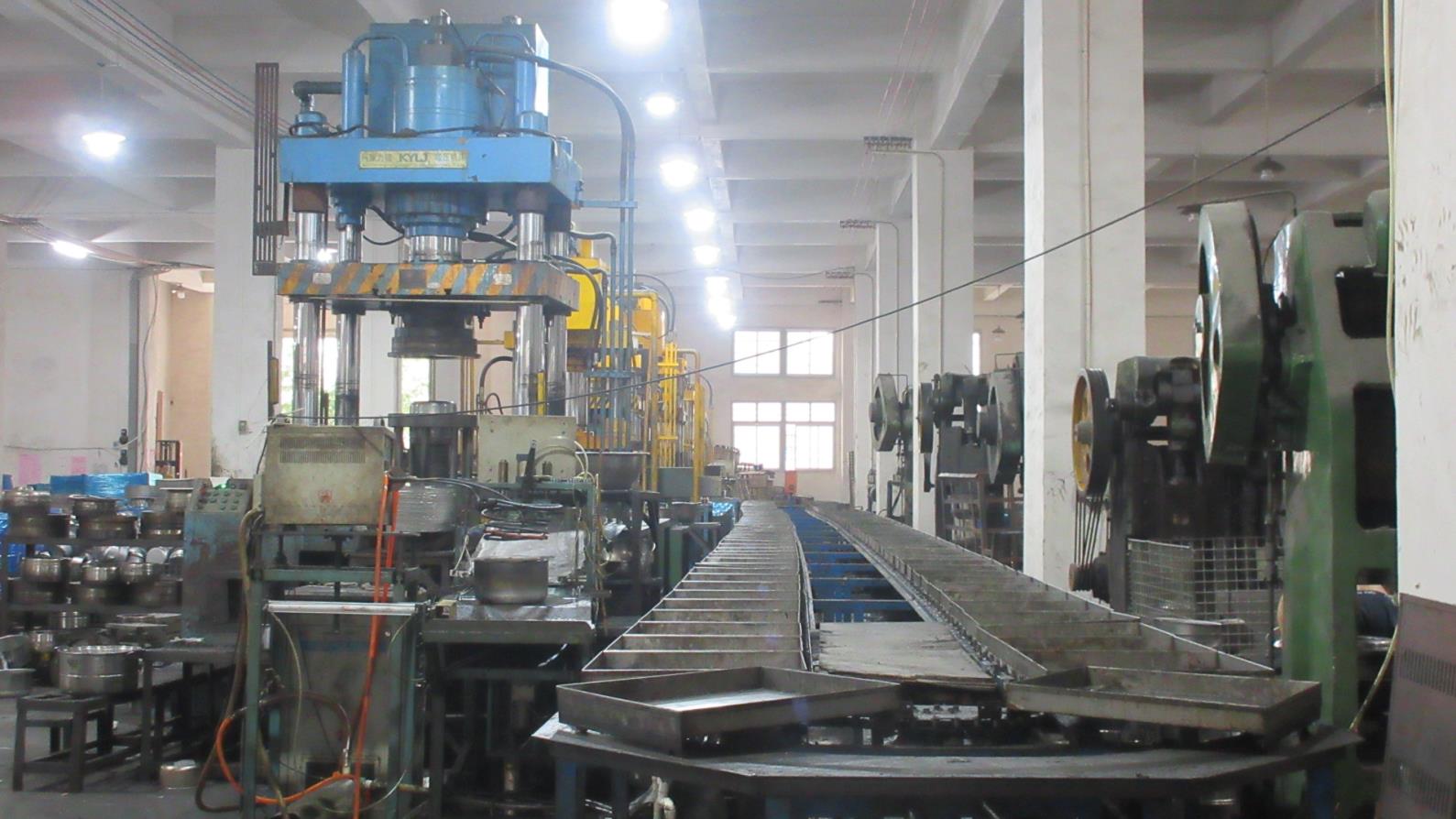
5. Forming
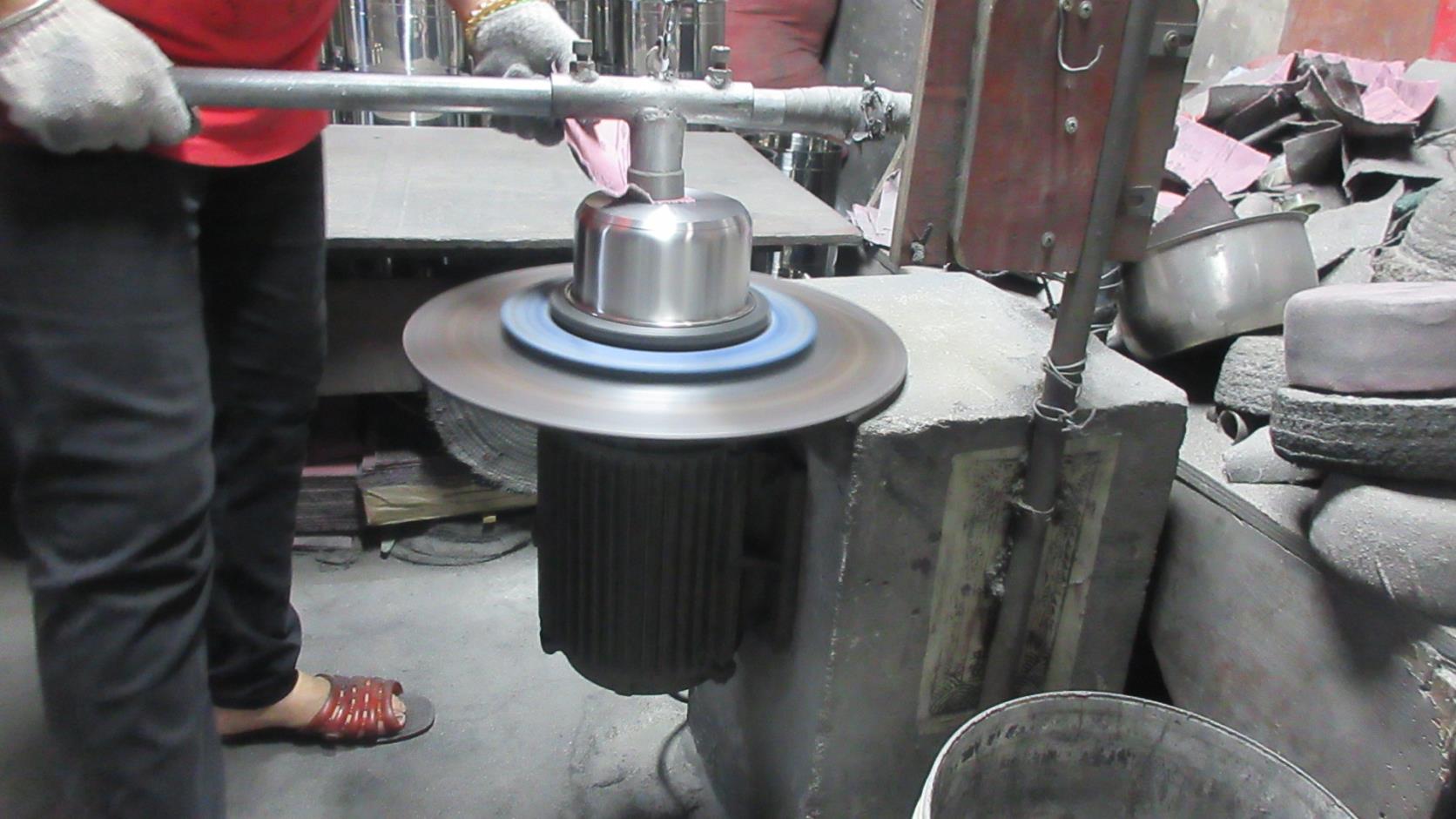
6. Polishing
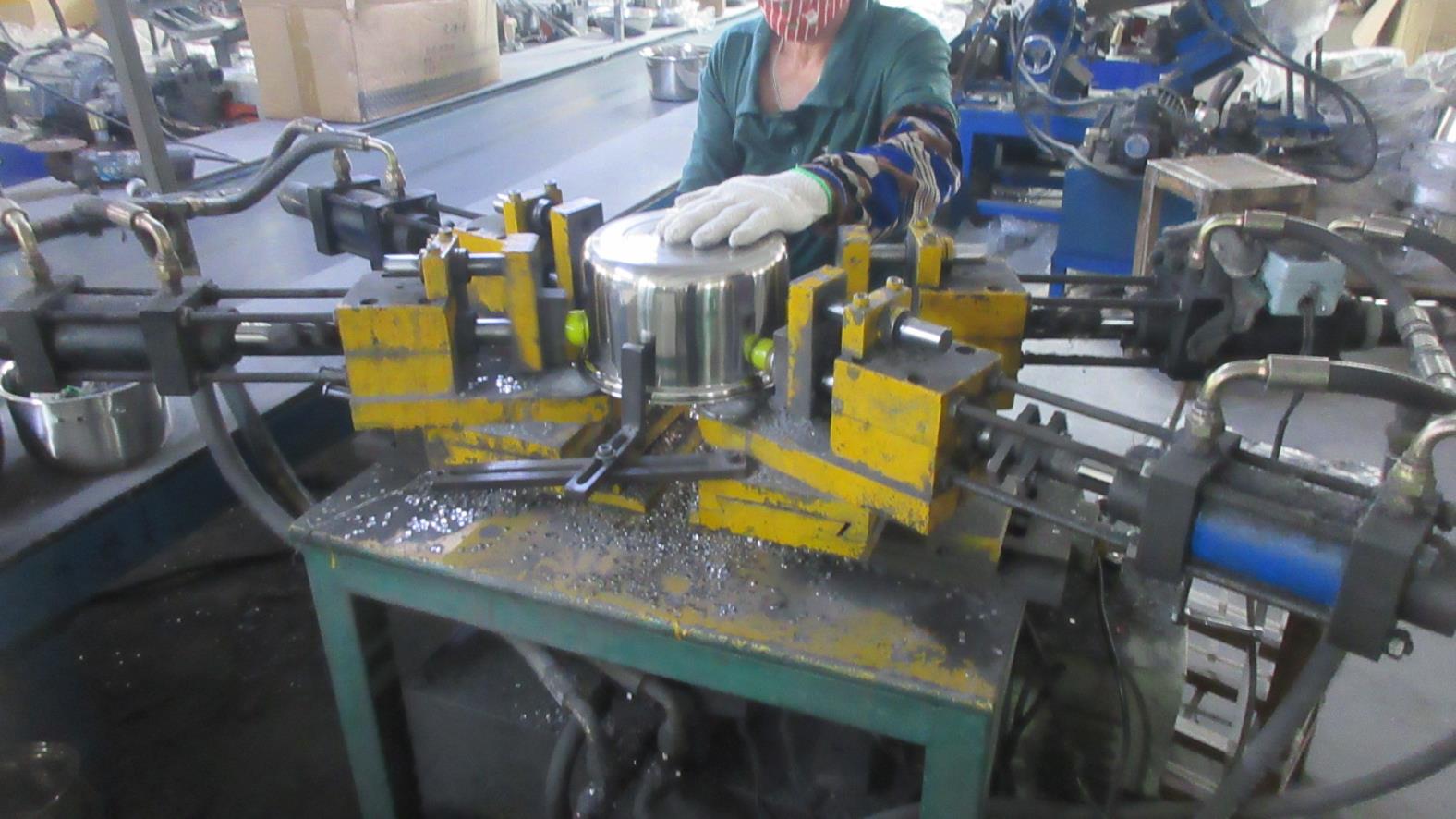
7. Punching
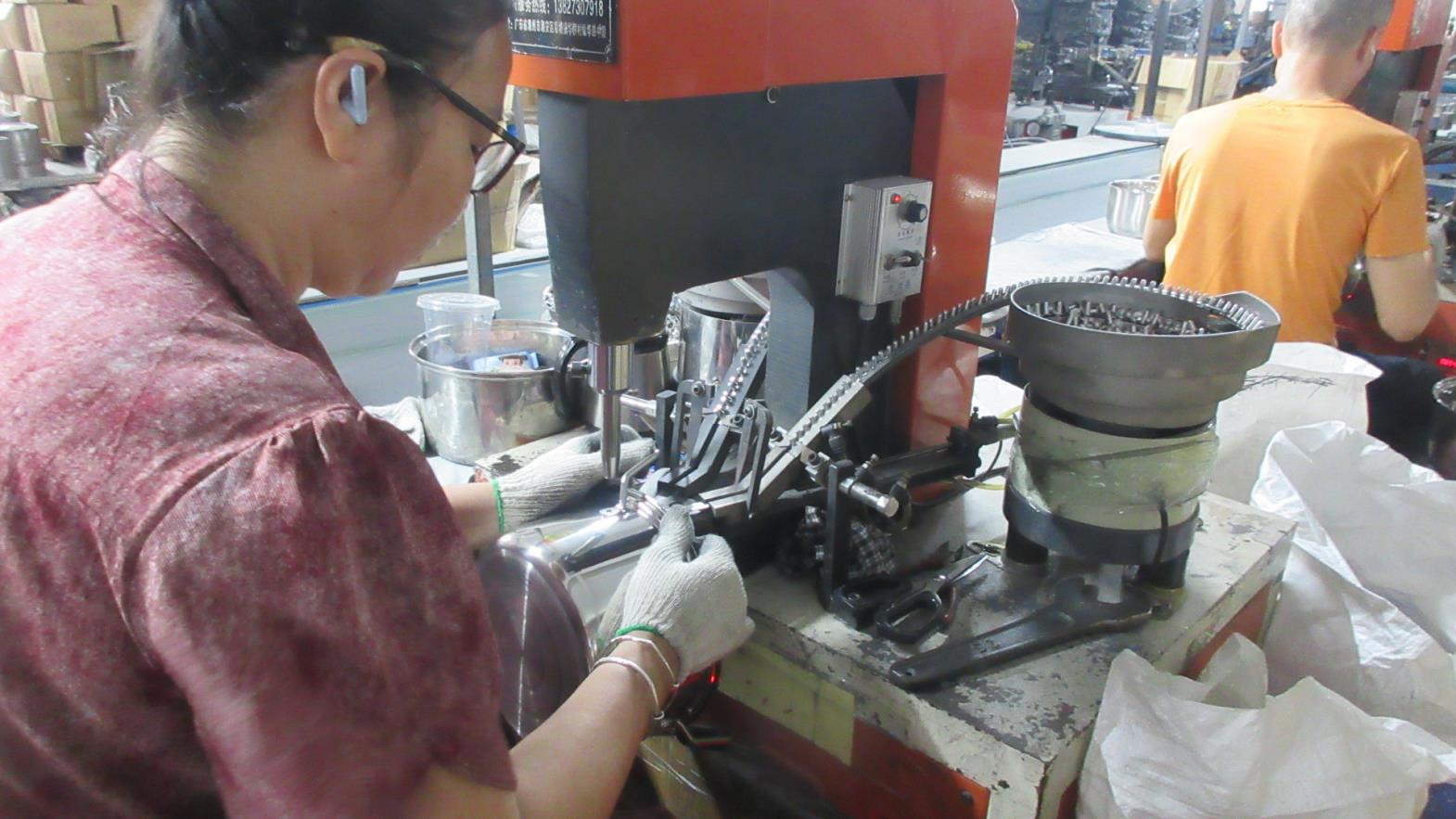
8. Riveting
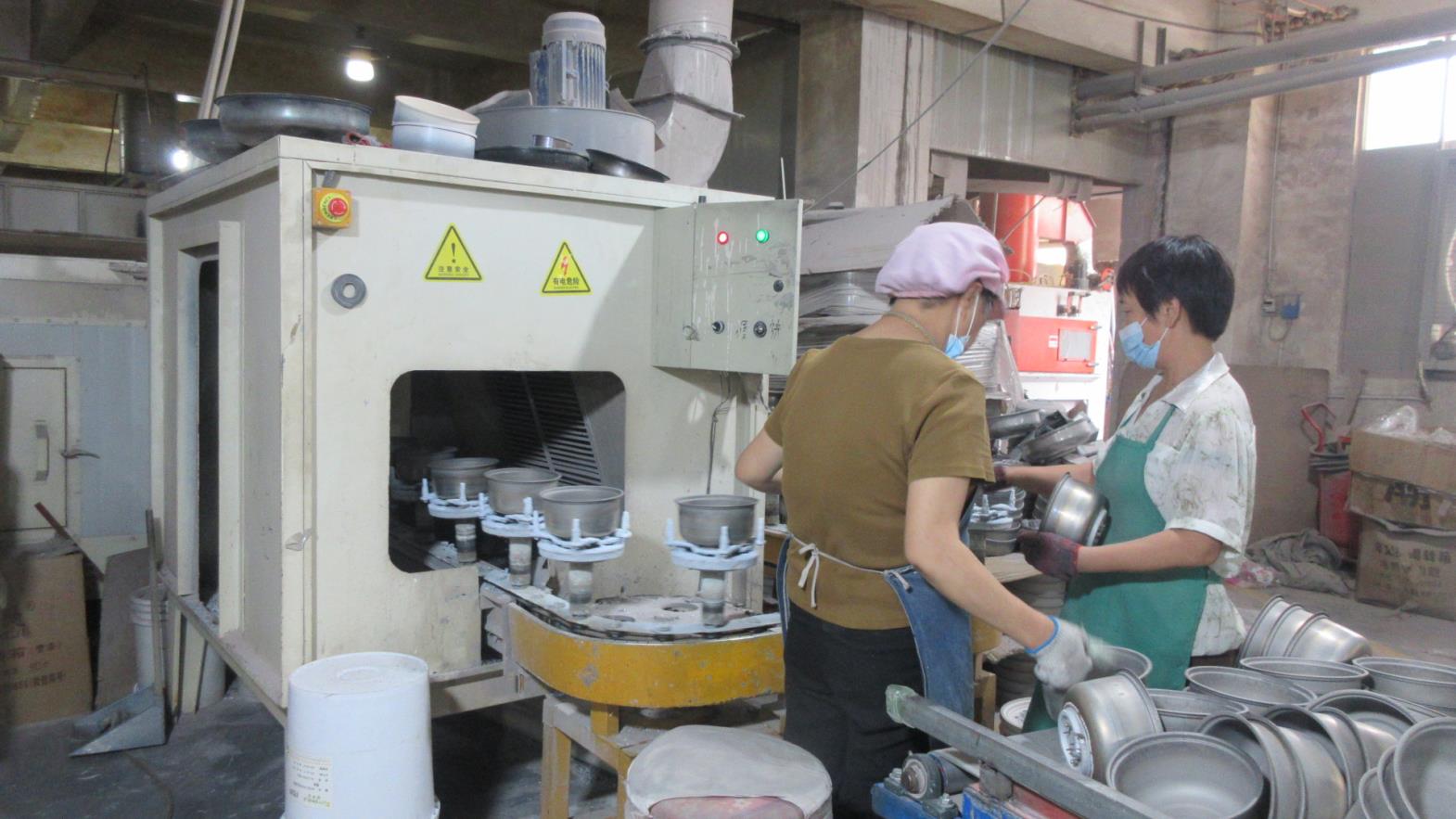
9. Painting
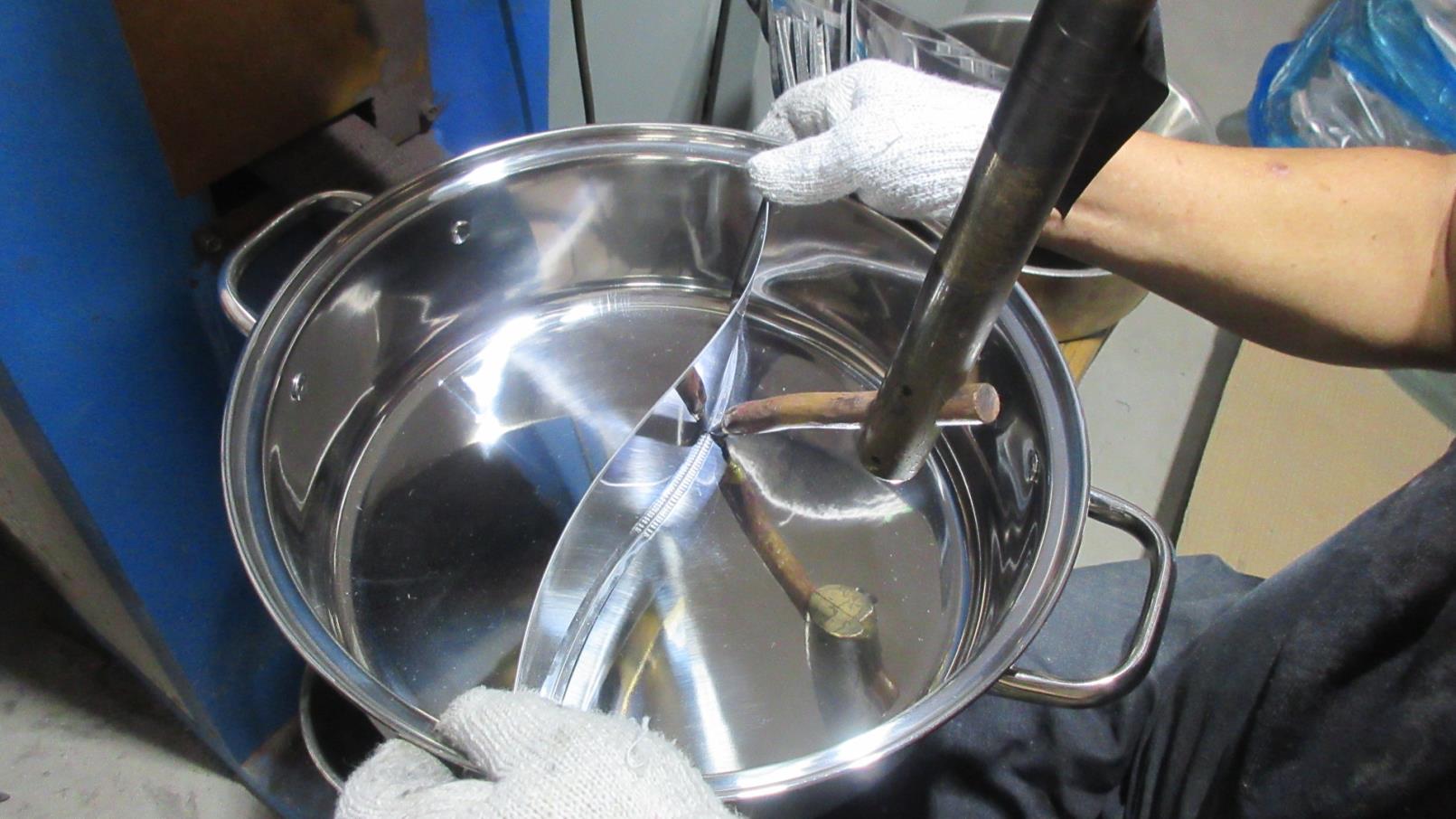
10. Welding
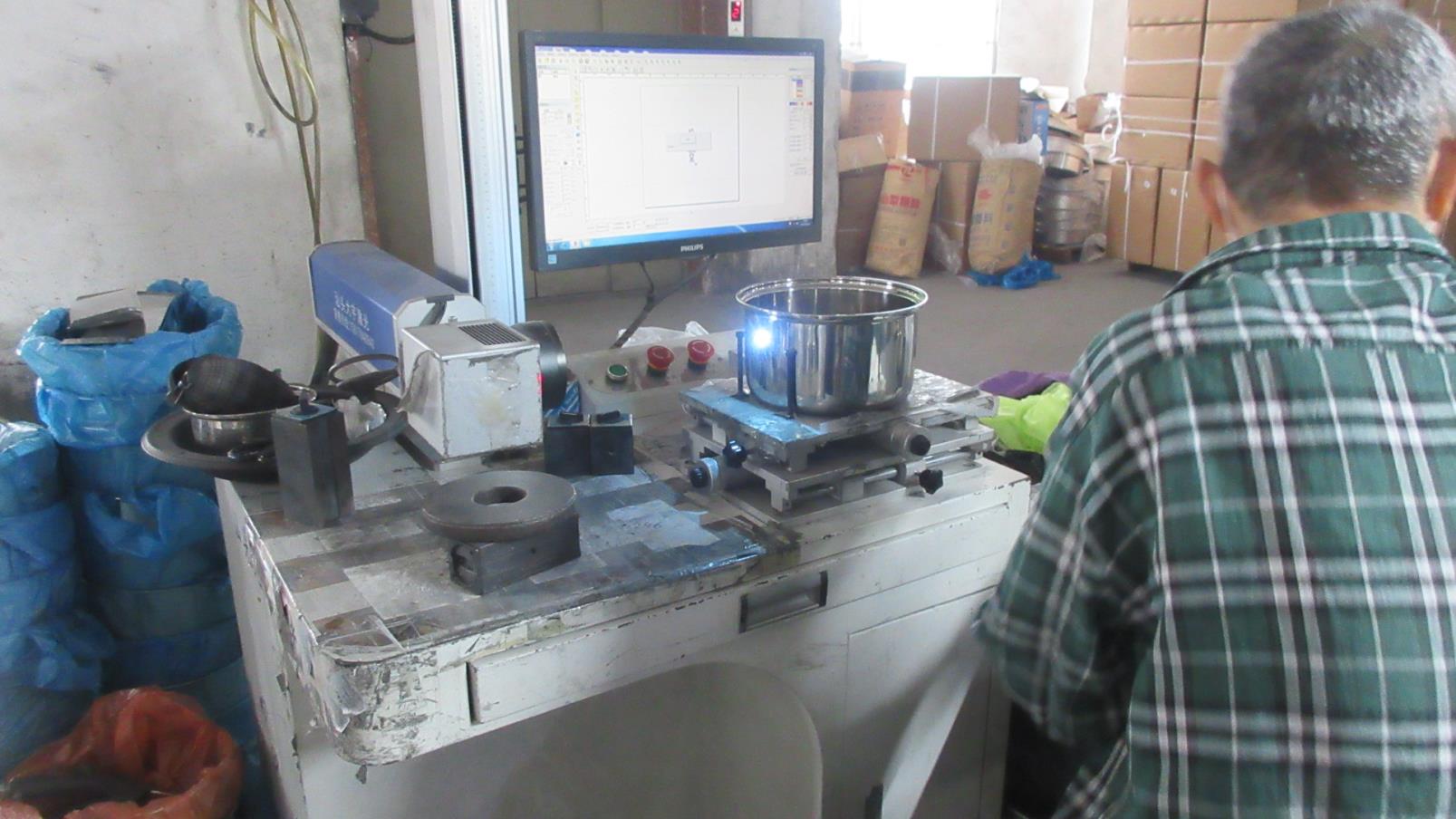
11. Laser Marking
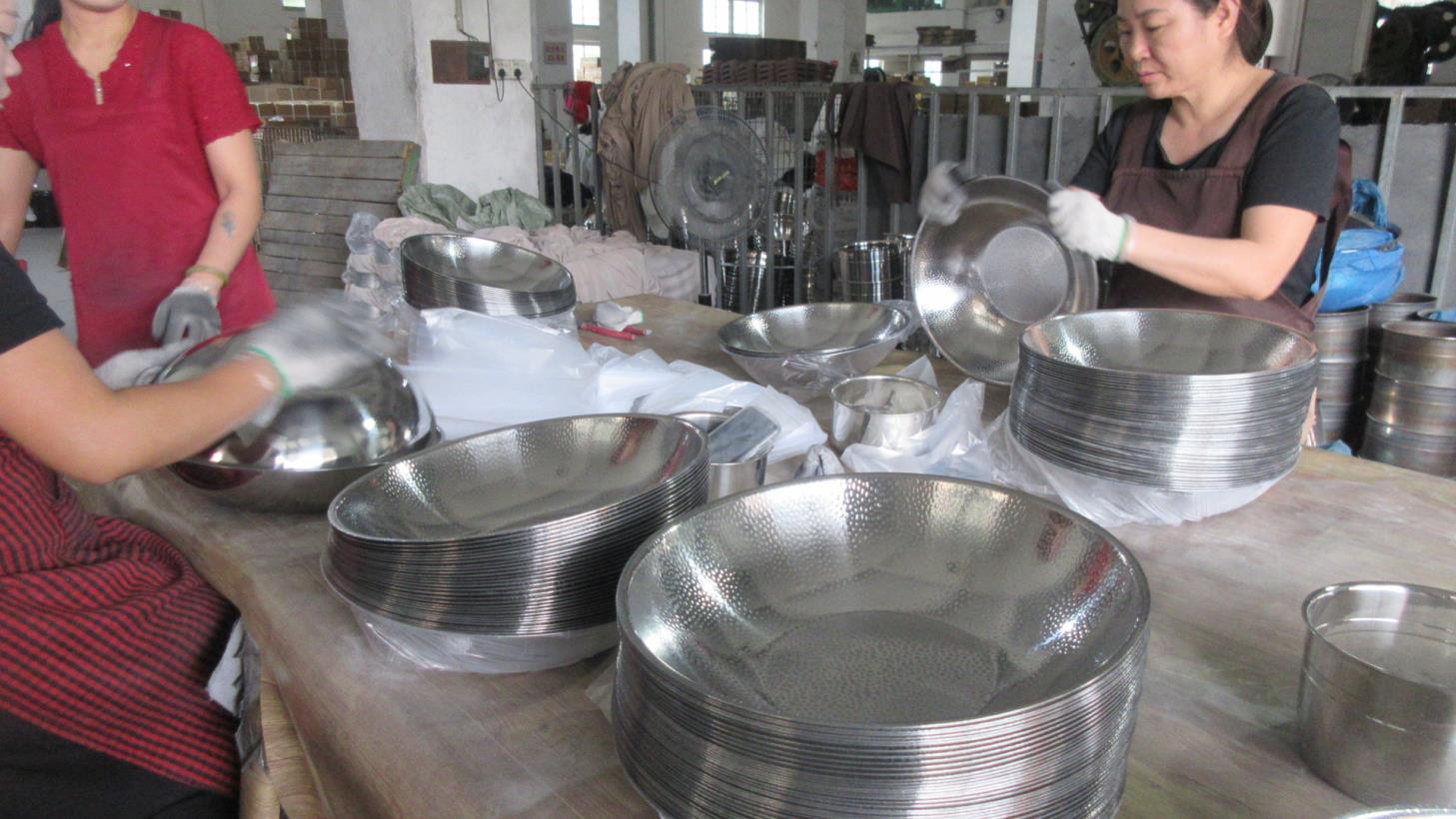
12. FQC Inspection
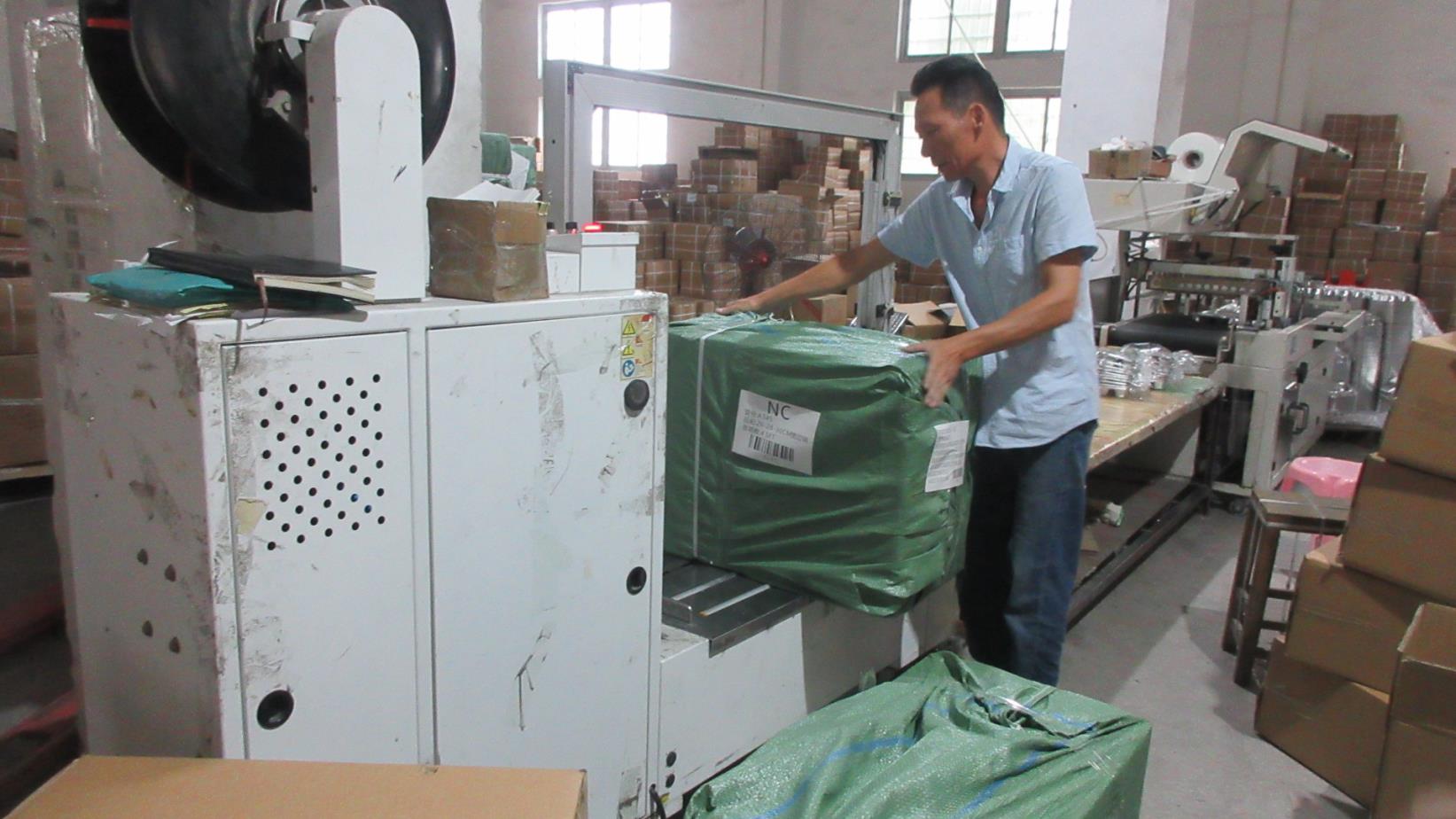
13. Packing
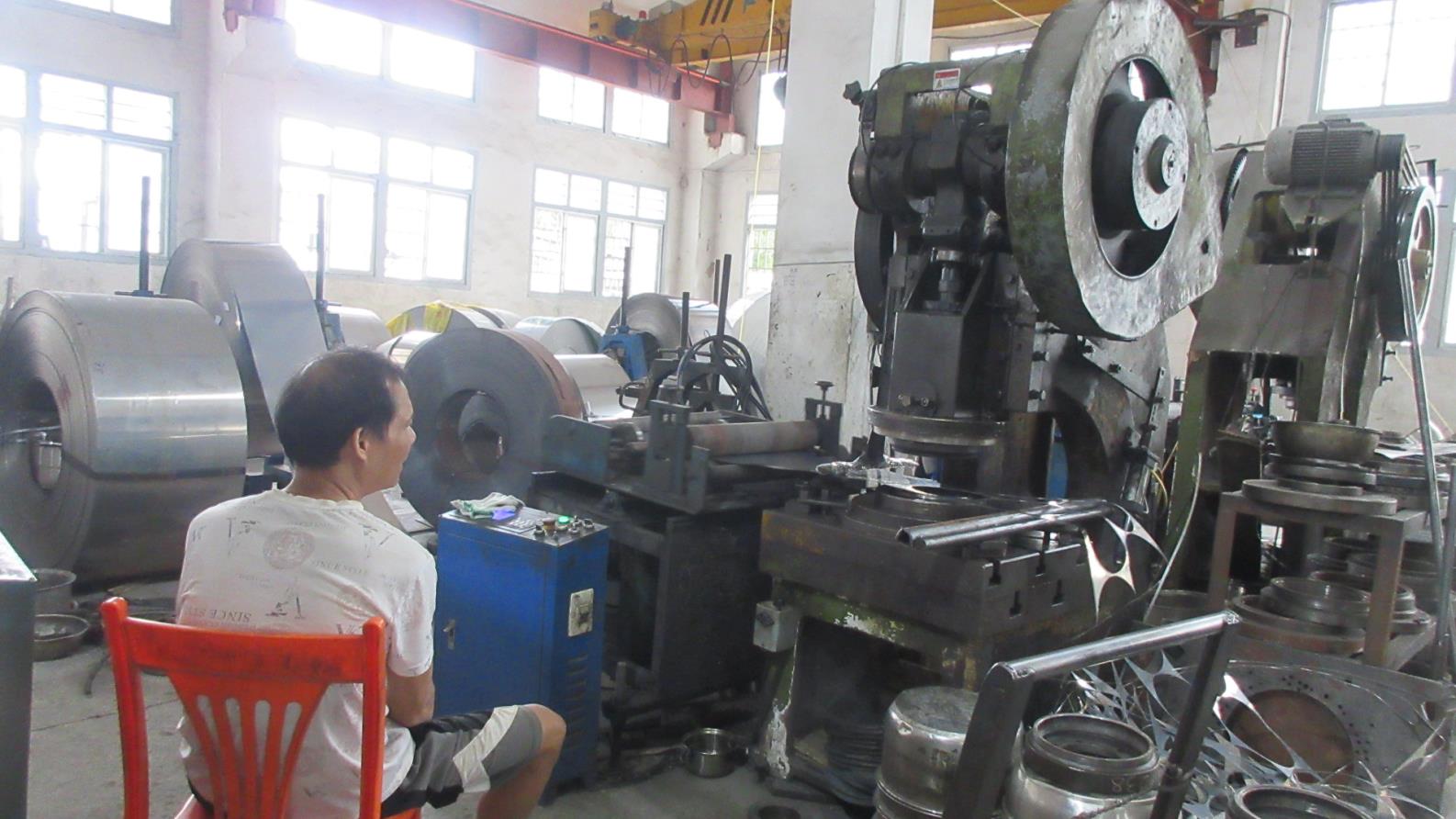
14. Machine Calibration
How Kaus Kitchenware balances optimal thermodynamic conductivity with maximum physical durability.
Utilizes high-tonnage friction presses to bond a 5mm aluminum thermal core between heavy-gauge SUS304 food-grade stainless steel and SUS430 magnetic steel, eliminating structural warping and hot spots.
Ergonomically engineered hollow-cast handles remain cool to the touch on hot ranges. Reinforced with solid rivets for structural safety when moving high-capacity stockpots filled with liquid.
Finished with a mechanical fine polish and electropolishing treatment, producing a smooth surface that reduces food adhesion, speeds up cleaning, and prevents microbial growth.
For Japanese B2B kitchenware importers, trading companies, and hospitality chains, customs and safety compliance are critical considerations. Our export processes are optimized to ensure smooth clearance at Tokyo Port (Oi Container Terminal, Aomi Container Terminal) and Yokohama Port.
We provide full verification and trace document packets including Mill Test Certificates (MTC), demonstrating material origins and verified chemical assays. Additionally, our packaging solutions are constructed to protect items during sea transport, utilizing heavy-duty double-wall corrugated cartons and moisture-barrier film wrapping to prevent sea-air oxidation during maritime shipping.
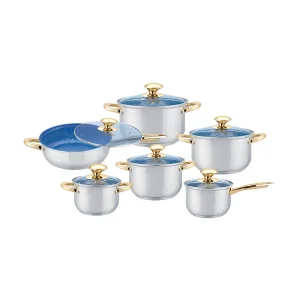
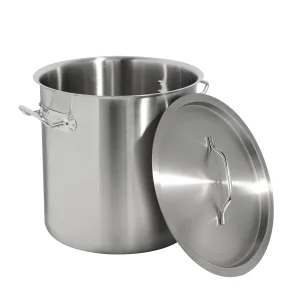
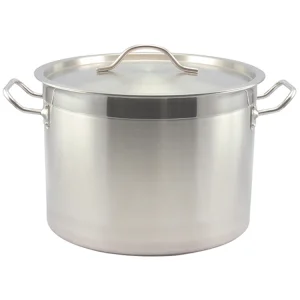
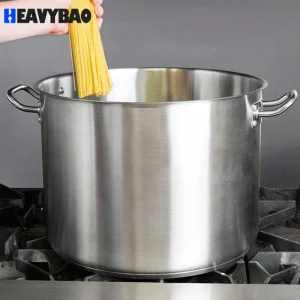
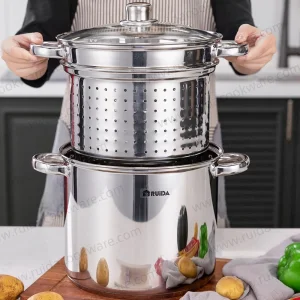
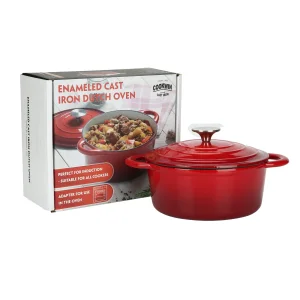
A comprehensive range of options for Tokyo hospitality networks, featuring varying capacities, handle systems, and lid configurations.
Everything you need to know about material standards, customized laser engraving, shipping logistics, and commercial guarantees.
SUS304 (equivalent to 18/8) is the standard material for most commercial applications due to its cost-efficiency and corrosion resistance. SUS316 (18/10, containing 2% molybdenum) is recommended for preparation environments with high salt exposure—such as boiling bone broths (Tonkotsu) or dashi bases—as it provides superior resistance to pitting and crevice corrosion.
Yes. We offer customizable manufacturing options including laser-marked scale markings (in liters/gallons), customized logo engraving on the handles or base, and specific outer surface configurations (satin finish, mirror polish, or customized powder coatings).
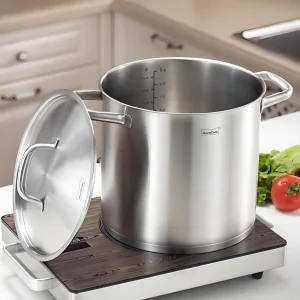
We use high-temperature impact-bonding machines to compress aluminum core disks between structural layers of steel. We perform mechanical tests on the bottom surface flatness before and after thermal shock testing to ensure compatibility with high-power commercial induction cooktops used in Japan (such as 3kW or 5kW induction heaters).
Standard production lead time ranges from 30 to 45 days depending on order volume and level of customization. Sea freight transit from Shenzhen/Shantou ports to Tokyo Port typically takes 5 to 7 days, allowing for efficient supply-chain replenishment cycles.
Get in touch with our commercial engineering team to request sample test units, custom catalogs, and volume-discount schedules tailored for the Tokyo commercial market.
Send Inquiry Now Kaus Kitchen