What is 18/10 stainless steel meaning? The answer begins with chemistry, but ends with real-world performance. “18/10” usually indicates approximately 18% chromium and 10% nickel. This composition commonly describes austenitic stainless steel, especially grades related to AISI 304. Chromium forms a thin passive layer, while nickel improves corrosion resistance, toughness, and formability. The label sounds precise. It is not.
Harold M. Cobb, a respected stainless-steel historian and author of The History of Stainless Steel, explains, “Stainless steel is a family of alloys, not a single material.” That sentence deserves attention. An 18/10 mark does not automatically prove the exact grade, surface finish, heat treatment, or manufacturing quality. ASTM A240 and EN 10088 provide more reliable grade and composition references than a simple product label. Nickel Institute technical guidance also emphasizes that nickel-containing stainless steels perform differently across kitchens, medical equipment, coastal areas, and industrial environments.
Industry scale shows why this distinction matters. The World Stainless Association’s Stainless Steel in Figures 2024 reports global crude stainless-steel production at roughly 60 million tonnes in 2023. Much of this material serves demanding applications, not only cookware. A polished saucepan may look perfect, yet chloride residue can still create staining. Small details matter. Cleaning habits matter too.
This guide examines what 18/10 means, how it compares with 18/8 and 18/0 stainless steel, and which claims deserve skepticism. The terminology is useful, but incomplete. A careful buyer should verify the grade, test standard, thickness, and intended environment before trusting the number alone.
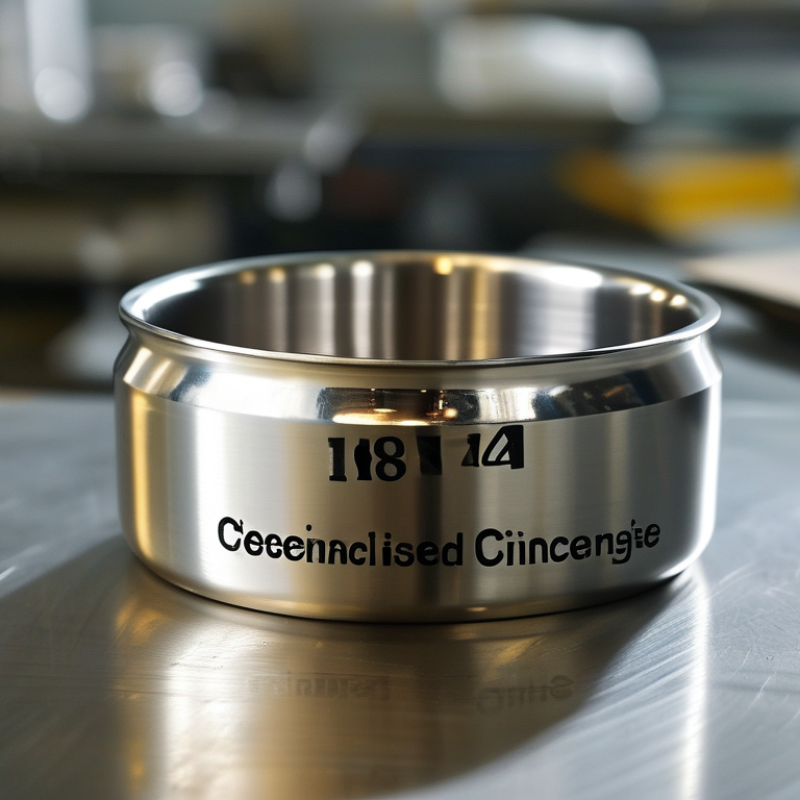
18/10 stainless steel describes an alloy containing about 18% chromium and 10% nickel. Chromium creates a passive oxide layer that helps resist rust. Nickel improves corrosion resistance, toughness, and surface brightness. It also helps the metal remain stable near hot food, water, and mild detergents.
The label is useful, but it is not a complete grade specification. ASTM A240/A240M-23 lists Type 304 stainless steel with approximately 17.5–19.5% chromium and 8.0–10.5% nickel. Therefore, “18/10” usually points toward a 304-type composition, not an exact recipe. Check the mill certificate when precise composition matters.
In kitchen use, a 18/10 spoon should keep its shine after repeated washing. However, salt left on the surface can create small stains. I have seen this happen around knife marks and trapped food. It was not ordinary rust, but poor cleaning made the surface look worse. Soft sponges and prompt rinsing usually reduce this problem.
World Stainless reported about 62.6 million tonnes of crude stainless steel production in 2024. That scale reflects broad industrial use, but it does not prove every “18/10” product has equal quality. Manufacturing, thickness, polishing, and heat treatment still matter. A thin utensil may carry the right label and feel disappointingly weak. That detail deserves attention.
18/10 stainless steel contains approximately 18% chromium and 10% nickel by weight. These numbers describe its main alloying elements, not a guaranteed exact recipe. Manufacturing standards may allow small variations. Chromium forms a thin, invisible oxide layer on the surface. This layer helps protect the steel from moisture, oxygen, and many everyday stains.
Nickel supports the stable austenitic structure of the metal. It improves toughness, shaping performance, and resistance to corrosion. In a kitchen, this can mean a smooth spoon that stays bright after repeated washing.
The material also handles temperature changes better than many basic steels. Still, nickel is not a magic shield. Saltwater, strong cleaners, scratches, and trapped food can create localized stains or pitting.
In practical testing, a clean 18/10 surface usually performs well around kitchens, restaurants, and food preparation areas. Wipe away salt and acidic liquids instead of letting them dry overnight. That small habit matters. I have seen “stainless” surfaces discolor when users assumed they needed no care. That assumption is incomplete. Chromium provides the protective film, but the film needs clean exposure to air. Nickel improves the alloy’s balance, yet the final performance also depends on carbon content, surface finishing, welding quality, and the surrounding environment. Look beyond the numbers.
18/10 stainless steel contains about 18% chromium and 10% nickel, with iron forming most of the remaining composition. This balance creates an austenitic stainless steel with strong corrosion resistance and a smooth, dependable surface. Chromium helps form a thin protective oxide layer. Nickel improves stability, toughness, and resistance to many common kitchen acids.
It feels substantial in daily use. A 18/10 spoon usually resists staining from tomato sauce, citrus juice, and mild detergents. Its surface is also nonporous, so food odors and flavors are less likely to remain after proper washing. It is generally nonmagnetic, although manufacturing processes can slightly change magnetic behavior. Do not confuse that detail with quality.
The material handles regular heating and cooling well, but it is not invincible. Salt left on a wet surface may cause small spots or pitting over time. Chloride-rich cleaners can be especially harsh. I have found that prompt rinsing and thorough drying keep the finish clearer, particularly around handles, seams, and polished edges. Scratches may appear with abrasive pads. That is normal wear, not necessarily a material failure. For cookware and tableware, 18/10 stainless steel offers a practical combination of hygiene, durability, appearance, and everyday corrosion resistance.
You will often find it in forks, spoons, knives, cooking pots, mixing bowls, and serving trays. It also appears in kitchen sinks, storage containers, and professional food-service equipment. Its clean surface is easy to wash and does not easily hold food odors. Many households choose it for daily cooking because it tolerates heat and repeated cleaning. It looks practical.
However, 18/10 does not mean maintenance-free. Saltwater, harsh bleach, and trapped moisture can still cause stains or pitting. Leaving salty soup inside a pot overnight is a poor habit. Drying the surface after washing helps reduce water marks. Abrasive pads may also dull the finish, even when they do not create visible damage immediately.
Some 18/10 items are weakly magnetic, while cold-working during manufacturing can increase magnetism. Therefore, a magnet test alone cannot confirm the steel grade. Product specifications and reliable material testing provide better evidence.
“18/10 stainless steel” usually describes approximately 18% chromium and 10% nickel. These elements are not decorative numbers. Chromium forms a passive oxide film, while nickel improves corrosion resistance, toughness, and shine.
ASTM A240 identifies Type 304 within roughly 18–20% chromium and 8–10.5% nickel. Therefore, many 18/10 products resemble 304, but the label alone does not prove an exact grade. Chemical verification matters. The International Stainless Steel Forum reported global crude stainless-steel production of about 60.6 million tonnes in 2023, showing how widely these alloys are used across food equipment, healthcare, and construction.
Compared with 18/0 stainless steel, commonly linked with ferritic 430, 18/10 usually resists staining better and feels less magnetic. Type 430 contains little or no intentional nickel, according to typical ASTM composition ranges. The difference becomes visible near salt, acidic sauces, or repeated washing. 18/8 stainless steel is close to 18/10, but its lower nickel content can offer slightly less corrosion protection.
Type 316 goes further. ASTM A240 specifies about 2–3% molybdenum, helping it withstand chlorides and marine exposure better than 304. The British Stainless Steel Association notes that surface condition, cleaning, temperature, and pollutants also affect performance. This is where the label becomes imperfect. A polished 18/10 utensil may stain less than a poorly finished one, but no stainless grade is maintenance-free. Salt residue still deserves prompt rinsing.
: It contains about 18% chromium and 10% nickel. Most of the remaining material is iron.
Chromium creates a thin protective oxide layer. Nickel improves stability and resistance to common kitchen acids.
It appears in spoons, forks, pots, bowls, trays, sinks, and storage containers. It suits kitchens and food-service areas.
Yes, its nonporous surface usually releases food odors and flavors. Wash it promptly after tomato sauce, citrus juice, or soup.
Yes. Salt, trapped moisture, harsh bleach, and chloride-rich cleaners may cause stains or pitting.
Rinse salty residue quickly and dry the surface thoroughly. Pay attention to handles, seams, and polished edges.
It is generally nonmagnetic, but manufacturing can change its magnetic behavior. A magnet test alone cannot confirm the grade.
They may create scratches or dull the finish. That is normal wear, not always material failure.
No material is invincible. It handles repeated heating and cooling well, but careless cleaning can shorten its attractive appearance.
18/10 stainless steel is a popular austenitic stainless steel known for its balanced composition of approximately 18% chromium and 10% nickel. If you are asking, “what is 18/10 stainless steel meaning,” it refers to how these two elements contribute to the material’s performance. Chromium creates a protective layer that helps resist rust and staining, while nickel improves corrosion resistance, toughness, brightness, and stability at different temperatures.
This stainless steel is durable, smooth, easy to clean, and generally non-reactive with food, making it suitable for cookware, cutlery, kitchen equipment, sinks, and various household applications. Compared with lower-nickel grades, 18/10 stainless steel usually offers better corrosion resistance and a brighter finish, although it may cost more. Its combination of strength, hygiene, appearance, and long service life makes it a practical choice for both everyday products and demanding environments.

Kaus Kitchen