Can you use barkeepers friend on stainless steel daily? The short answer is usually no. Bar Keepers Friend can remove tea stains, burnt-on food, water marks, and dull mineral buildup. However, its cleaning power comes with responsibility. The powder cleanser contains oxalic acid and mild abrasives, while liquid formulas may feel gentler. Neither product should become an automatic daily step for every stainless steel surface.
Professional cleaning educator Angela Brown offers a useful rule: “Use the least aggressive cleaner that solves the problem.” That advice matters here. Stainless steel looks tough, but its brushed grain can collect fine scratches. Repeated scrubbing may leave cloudy patches, especially around sink drains, cooker handles, and refrigerator doors. Daily wiping with warm water, a soft microfiber cloth, and mild dish soap is usually safer. Reserve Bar Keepers Friend for visible stains that ordinary cleaning cannot remove.
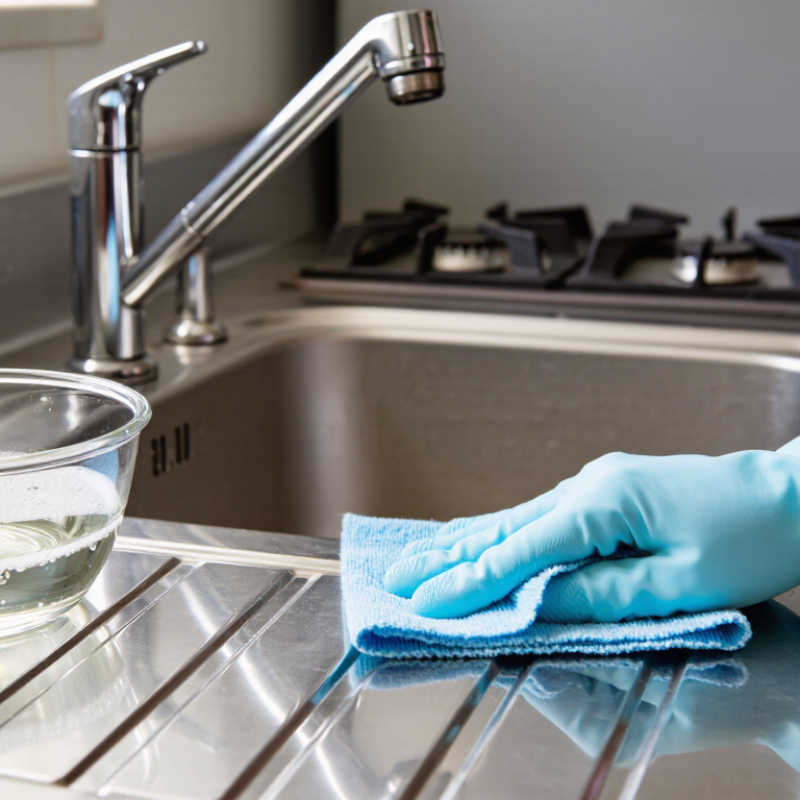
Read the product label carefully. Wear suitable gloves, apply a small amount, and rub with the grain, not across it. Do not leave the cleaner sitting on the metal. Rinse thoroughly, then dry the surface completely to prevent streaks. Test an unseen corner first. This step feels slow, but it can prevent an expensive mistake. Some finishes react differently, and manufacturer instructions should guide the final decision. I have found that “cleaner” does not always mean “better.” A stainless steel pan may tolerate occasional treatment, while a delicate appliance panel may show damage sooner. The safest routine is gentle maintenance, careful spot cleaning, and restraint.
A common powdered or cream stainless-steel cleanser contains oxalic acid, mild surfactants, and fine mineral abrasives. Oxalic acid reacts with iron oxide, rust marks, and hard-water deposits. The abrasive particles then loosen the remaining film. Surfactants help suspend grease, so water can carry it away.
It is chemistry, not magic.
The NACE IMPACT study estimated global corrosion costs at about 3.4% of worldwide gross domestic product. Removing corrosive deposits early can therefore support longer service life, although aggressive scrubbing may create new surface damage. ASTM A967/A967M emphasizes controlled cleaning and passivation practices for stainless steel, while the British Stainless Steel Association recommends non-scratching tools and thorough rinsing. These principles matter in kitchens, where salt, acidic food, and mineral-rich water collect around seams.
For occasional stains, apply a small amount to a wet cloth. Rub with the grain, not across it. Rinse completely, then dry with a soft towel. Daily use is usually unnecessary. Repeated abrasion can dull the finish, especially on brushed surfaces. I would not treat this cleanser as a daily polish. That assumption needs challenging. Always test a hidden area first, and follow the product’s safety instructions. Never mix acidic cleaners with chlorine-based products.
| Data Dimension | Evidence-Based Information | Practical Guidance |
|---|---|---|
| Primary purpose | It is a stainless-steel cleaning product intended to remove surface stains, mineral deposits, discoloration, and some rust marks. | Use it for occasional or targeted cleaning rather than as an automatic daily cleaner. |
| How it cleans | Oxalic-acid-based formulas dissolve or loosen iron-based stains and mineral deposits. Powdered formulas also contain mild abrasive particles that help lift soil from the surface. | Allow the cleaner to do most of the work; avoid aggressive scrubbing. |
| Suitable stainless-steel surfaces | Generally suitable for common household stainless-steel sinks, cookware, appliances, and fixtures when the surface is intact and the product directions permit use. | Test first on a small, inconspicuous area, especially on brushed, coated, or decorative finishes. |
| Recommended daily use | Daily use is usually unnecessary for routine fingerprints, light grease, and fresh food residue. | Use a soft cloth with warm water and a mild dish detergent for routine daily cleaning. |
| Best use frequency | Use when visible staining, water spots, tarnish, or rust-colored marks remain after normal washing. | Frequency depends on soil level and water quality; occasional use is generally more appropriate than a fixed daily schedule. |
| Typical contact approach | Apply a small amount to a wet surface, spread it over the stain, and follow the package directions for contact time. | Do not leave the cleaner on the metal longer than directed, and do not allow residue to dry on the surface. |
| Scrubbing method | Stainless steel can develop visible scratches when abrasive particles are rubbed too firmly or against the grain. | Use a soft, non-scratch sponge or microfiber cloth and wipe in the direction of the existing grain. |
| Rinsing requirement | Acidic cleaning residue can remain on the surface if it is not removed thoroughly. | Rinse with clean water after cleaning, then dry completely with a soft towel to reduce water spots. |
| Stain types it can address | It may help with mineral scale, tea or coffee discoloration, cooked-on residue, and light surface rust staining. | Severe pitting, deep corrosion, and permanent scratches may not be removable through cleaning alone. |
| Surface grain | Brushed stainless steel has a directional finish that can show marks when rubbed across the grain. | Identify the grain before cleaning and maintain the same direction during application and wiping. |
| Materials to protect | Acidic cleaners and abrasives may damage marble, limestone, other acid-sensitive stone, delicate coatings, and some non-metal surfaces. | Keep the product away from incompatible materials and follow the surface-care instructions for the item. |
| Important chemical safety | Acidic cleaners should not be mixed with chlorine bleach, ammonia, or other household cleaning chemicals because hazardous vapors or reactions may occur. | Use one cleaner at a time, provide ventilation, and follow the product safety directions. |
| Protective equipment | Direct contact with an acidic cleaner can irritate skin and eyes. | Wear suitable gloves, avoid splashes, and wash hands after use. Use eye protection when splash exposure is possible. |
| Effect on stainless-steel appearance | Correct use can improve brightness by removing deposits and discoloration, but excessive abrasion may create a dull or visibly scratched area. | Use the least aggressive method that removes the stain and stop once the surface is clean. |
| Daily-care alternative | Warm water, a small amount of mild dish detergent, and a soft microfiber cloth are usually adequate for everyday stainless-steel maintenance. | Dry after washing and clean spills promptly to prevent mineral deposits and food residue from building up. |
| Overall conclusion | Bar Keepers Friend can be effective on stainless steel, but daily use is generally not recommended or needed for routine cleaning. | Use it periodically for stubborn stains, rinse thoroughly, and follow the surface and safety instructions. |
Note: Formulas, directions, and approved surfaces can vary by product type and region. Always check the current product label before use.
Oxalic acid reacts with rust, iron oxide, and hard-water deposits. Fine minerals loosen the remaining film. Surfactants help carry away grease. It is chemistry, not magic.
Use it for tea marks, burnt residue, rust spots, or rainbow discoloration. Warm water and mild dish soap suit routine cleaning better. Daily use is usually unnecessary.
Wear gloves and open a window. Wet the surface with clean water. Put a small amount on a damp sponge, not directly on the steel.
Follow the visible grain with gentle strokes. Avoid circular scrubbing. Circles may leave obvious swirls, especially on brushed steel.
Let the paste sit briefly, usually less than one minute. Do not let it dry. A dry residue becomes harder to remove.
Rinse thoroughly with fresh water. Wipe away cloudy film using a clean microfiber cloth. Dry immediately to reduce water spots.
No. Cleaning removes dirt and residue, while disinfecting is separate. Do not assume a clean-looking sink is disinfected.
Too much powder and aggressive scrubbing can dull brushed surfaces. I once used too much on a sink corner. The finish looked flatter afterward. Test a hidden area first, especially on polished, coated, or older steel. Never mix acidic cleaners with chlorine-based products.
Can you use barkeepers friend on stainless steel daily? The answer depends on the surface, product form, and cleaning method. This powdered or liquid cleaner works by combining mild abrasives with ingredients that help loosen grease, stains, mineral deposits, and discoloration. It can be suitable for occasional or carefully controlled daily cleaning on durable, smooth stainless steel, but it should not automatically become the default for every surface.
To use it safely, wet the steel, apply a small amount of cleaner, and gently wipe in the direction of the grain with a soft sponge or cloth. Rinse thoroughly and dry to prevent residue and water marks. Extra care is needed with brushed, polished, coated, embossed, or delicate finishes, as repeated abrasion may dull or scratch them. Daily use can also leave hazy buildup or weaken the appearance of the finish. Prevent these problems by using minimal product, avoiding harsh pads, testing an inconspicuous area first, and choosing a mild cleaner for routine maintenance.

 Kaus Kitchen