2026 Top Tips for Eggs Not Sticking to Stainless Steel

Time:2026-09-26 Author:Ethan
0%

Eggs can go from glossy and tender to stubbornly welded onto a stainless steel pan in seconds. That does not mean stainless steel is unsuitable for breakfast. It means heat, fat, and timing need to work together. A pan that is too cool may encourage sticking, while excessive heat can set the egg before it releases. Small details matter.

This guide explains how to cook eggs on stainless steel without sticking, using practical steps you can check as you cook. Learn how to preheat the pan, judge its temperature with a few drops of water, and add butter or oil at the right moment. The water test is a useful clue, not a perfect guarantee; stove power and pan thickness change the results. A thin skillet heats differently from a heavy one.

We’ll also cover what to do when an egg still clings, and how to clean the pan without reaching for harsh abrasives. Expect clear signs to watch for: butter should foam gently, and the egg should begin to release when its underside has set. There may be a little trial and error. I’d be cautious about any tip that promises flawless eggs every time, because kitchens and pans vary. With a few calm adjustments, stainless steel can produce soft, evenly cooked eggs and a pan that cleans up more easily.
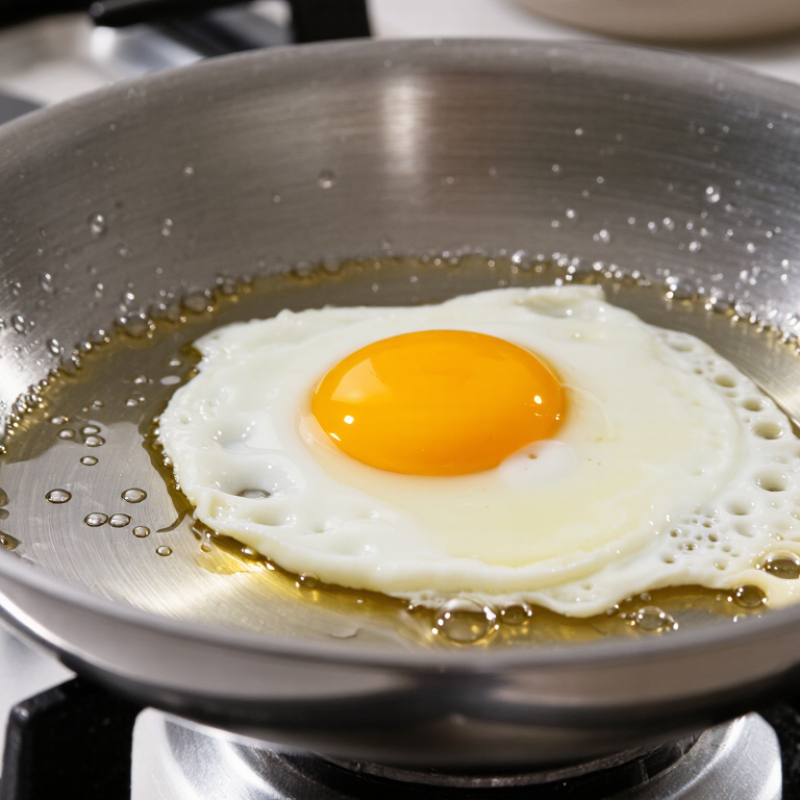
2026 Top Tips for Eggs Not Sticking to Stainless Steel

Choose a Suitable Stainless Steel Pan for Cooking Eggs

Choose a pan with a flat, heavy base and a bonded aluminum core. The stainless cooking surface is durable, but stainless steel alone spreads heat slowly. ASM International’s materials-property data place 304 stainless steel’s thermal conductivity near 16 W/m·K at room temperature, compared with roughly 200 W/m·K for aluminum. That difference matters. An aluminum core helps reduce hot spots that can set egg proteins unevenly.

For one or two eggs, a pan around 20–24 centimetres wide is usually easier to control than a large skillet. Match the base to the burner: a small burner under a wide pan can leave the centre hotter than the edges. Look for a base that sits level, without rocking, and a handle that stays secure when the pan is lifted. A thick base takes longer to heat, but its temperature tends to change less abruptly.

A polished interior may be easier to clean, yet no finish makes stainless steel nonstick. Check that the cooking surface is smooth and free of deep scratches. For a practical test, warm the empty pan gently and watch for uneven heating; some variation is normal, and home burners are imperfect. A pan that feels “premium” in the hand can still be the wrong size for your stove.

Clean and Preheat the Pan Evenly

2026 Top Tips for Eggs Not Sticking to Stainless Steel

Clean, dry, and preheat the pan evenly before adding eggs. Old oil, stuck-on food, or water droplets can create uneven contact and make sticking more likely. Wash away residue, dry the cooking surface, then warm the pan over medium-low heat for a few minutes. Stainless steel does not spread heat as quickly as aluminum: ASM International’s materials-property data puts typical 304 stainless steel conductivity near 16 W/m·K. That makes steady, moderate heating especially useful. A thin pan over a small burner may heat unevenly; give it more time, and avoid turning the flame to high.

Tip: Add a little oil or butter only after preheating. Swirl it into a thin, glossy layer across the base. If it smokes, the pan is too hot; lower the heat and let it cool briefly. Crack in one egg as a test. If the white immediately races outward or browns, reduce the heat. If it settles gently, add the rest.

Keep the burner centered beneath the pan, and do not rush the warm-up. A clean-looking pan can still hold invisible grease patches, so wash thoroughly after cooking. I sometimes find that my “even” preheat was not even at all—especially on a crowded stovetop. Check the pan surface, not just the flame.

Test the Temperature Before Adding Fat

A stainless-steel pan can look ready before its surface is evenly hot. Set it over medium-low heat for two to three minutes, then test before adding fat. Flick in a few drops of water. If they sizzle away immediately, the pan may be too cool; if they gather into a moving bead, the surface is hot enough to proceed. Wipe the water out carefully. Do not let the pan smoke. A contact surface thermometer gives a clearer reading than an infrared thermometer on shiny steel, which can misread reflective surfaces.

Add a thin layer of butter or oil only after the test, then give it a few seconds to warm. The fat should look fluid, not smoky. Lower the heat if it darkens quickly. Add the egg and wait for the edges to turn opaque before nudging it; scraping too soon often tears the setting white. Temperature control helps, but it is not magic. I still sometimes rush the preheat, and the egg tells on me.

USDA FSIS advises cooking egg dishes to 160°F for food safety; that is an internal food temperature, not a target for the pan. Keep the distinction clear, and use gentle heat rather than relying on a single water-drop test.

Add Fat and Let It Heat Before the Eggs

A stainless-steel pan can cook eggs gently, but the order matters. Set the clean, dry pan over medium heat for about a minute. Then add oil or butter and let it warm before the eggs go in. Fat needs time to spread into a thin, even layer across the cooking surface.

Watch the fat, not just the clock. Oil should look glossy and move easily when you tilt the pan, but it should not smoke. Butter should melt and foam lightly; add the eggs before it turns brown. Not too hot. If the fat darkens quickly, lift the pan from the burner briefly or lower the heat. A pan that is too hot can make the eggs seize and stick, even with plenty of fat.

Once the fat coats the bottom, lower the heat to medium-low and add the eggs. Give them a few seconds to set at the edges before stirring or nudging them with a flexible spatula. Avoid scraping immediately; the first soft layer often releases more easily as it cooks. Timing varies with pan thickness and burner strength, so expect a little trial and error. I still find that rushing the preheating step is the easiest mistake to make.

Cook Gently and Release the Eggs at the Right Time

Stainless steel needs steady heat, not a blazing burner. Set the pan over medium-low heat for a minute or two, then add a small amount of butter or oil. The fat should shimmer gently, not smoke. If the pan is too hot, egg whites can seize before they have time to release. If it is too cool, they may spread and cling. That balance takes practice.

Pour in the eggs and give them a moment. For a fried egg, wait until the white looks opaque around the edges and mostly set near the yolk. Then slide a thin spatula underneath; it should move without force. For scrambled eggs, let a soft layer form on the bottom before pushing it slowly toward the center. Keep the heat low, and stop while the eggs still look slightly glossy. Residual heat will finish them. I still find it tempting to poke too early. That usually makes a mess. If an egg resists, wait a few seconds rather than scraping hard; the underside may simply need more time to set.

FAQS

What type of stainless steel pan works well for eggs?

Choose a flat, heavy base with a bonded aluminum core. A 20–24 cm pan is usually manageable for one or two eggs.

Why does a pan need an aluminum core?

Stainless steel spreads heat slowly. An aluminum core helps reduce hot spots that can cook egg whites unevenly.

How should I preheat the pan?

Wash and dry it, then warm it over medium-low heat for a few minutes. Give it time; rushing can leave uneven patches.

How can I check the pan’s temperature?

Flick in a few water drops. Moving beads suggest the surface may be ready; wipe them out carefully before adding fat. The test is not perfect.

When should I add oil or butter?

Add a thin layer after preheating, then swirl it across the base. The fat should look fluid, not smoky.

What should I do if the fat smokes?

Lower the heat and let the pan cool briefly. A smoking pan is too hot for gently cooking eggs.

When should I move an egg in the pan?

Wait until the edges turn opaque before nudging it. Scraping too soon can tear the setting white.

How can I reduce sticking?

Remove old grease and food residue, dry the pan, and use a light layer of fat. Stainless steel is not nonstick.

What temperature should egg dishes reach for food safety?

Cook egg dishes to an internal temperature of 160°F. That is the food temperature, not a pan setting.

Conclusion

Learning how to cook eggs on stainless steel without sticking starts with choosing a pan that heats evenly and is appropriately sized for the number of eggs. Begin with a clean, dry pan, then warm it gradually over medium heat so the surface heats consistently. Before adding anything, test the temperature with a few drops of water: if they gather into small beads and glide across the pan, it is ready. If the water evaporates immediately or the pan seems too cool, adjust the heat and test again.

Add butter or cooking oil and give it a moment to warm and spread across the surface before adding the eggs. Keep the heat gentle while cooking, since excessive heat can make eggs seize or brown too quickly. Avoid trying to move them right away; as the eggs set, they naturally release more easily. Gently lift an edge with a thin spatula, then turn or remove the eggs when they are ready.

Ethan

Ethan

Ethan is a seasoned marketing professional with a deep expertise in our company's innovative product line. With a passion for sharing knowledge and insights, he takes the lead in regularly updating our corporate blog, where he explores industry trends, product features, and effective marketing......