Steaming vegetables does not require a special basket or expensive equipment. With a stainless steel pot, a heatproof plate, and a small amount of water, you can create a simple steaming chamber at home. This guide explains how to steam vegetables in a stainless steel pot without basket while protecting their color, texture, and nutrients. The method works for broccoli, carrots, green beans, cauliflower, and sliced squash.
Food science writer Harold McGee describes steaming as “a gentle way to cook food.” That gentle heat matters. The vegetables should sit above the water, not swim in it. Place a small, inverted heatproof bowl inside the pot, then rest a plate on top. Add water below the plate’s level. Cover the pot tightly, and keep the heat moderate. A rattling lid usually means the heat is too high.
Keep it simple.
Cut vegetables into similar sizes. This helps them cook evenly. Broccoli florets may need five to seven minutes, while carrot coins often need eight to ten. Test them with a fork. They should feel tender but still offer slight resistance. Honestly, this method can be less stable than using a fitted basket. The plate may shift, and too much water can soften the vegetables. I once added extra water too quickly and lost the crisp edges I wanted.
Use oven gloves when lifting the lid. Hot steam can burn skin quickly. Drain the vegetables immediately, then season with salt, lemon juice, olive oil, or toasted sesame seeds. Small adjustments make a noticeable difference.
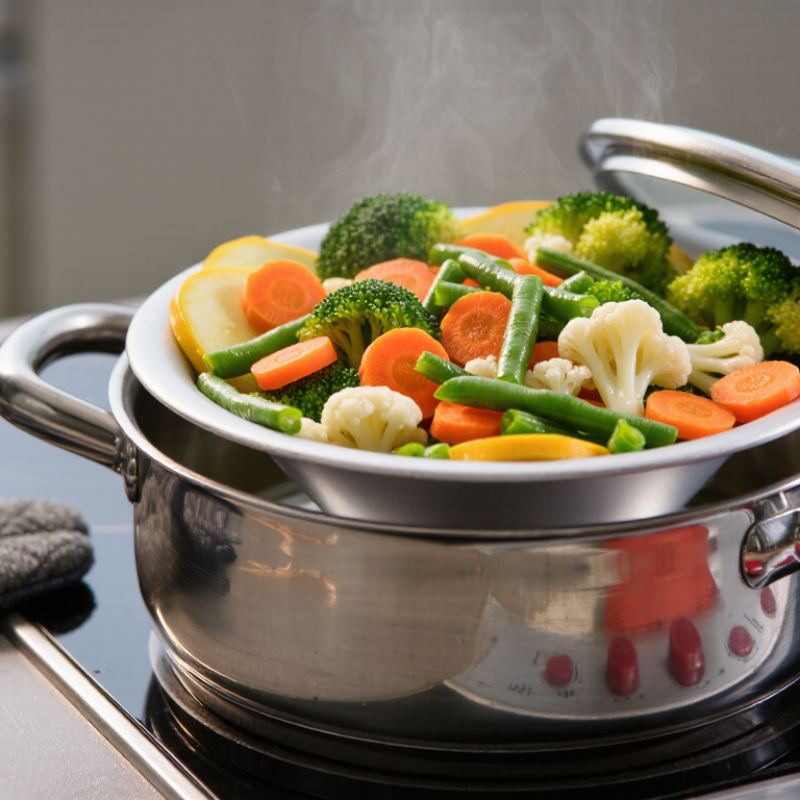
Choose a stainless-steel pot with a heavy base and a snug, heat-resistant lid. A wide pot works better than a narrow one because steam can circulate around the vegetables. The pot should be deep enough to hold water below the steaming setup without touching the food. Keep at least two centimeters of clearance. Small detail, but important.
Place a heat-safe metal rack, trivet, or overturned stainless bowl inside the pot. Add about two centimeters of water, then set a shallow heat-safe plate above it. The plate must remain stable when loaded. Glass is suitable only when it is specifically rated for stovetop heat. I avoid ordinary dishes because thermal shock can crack them. Cover the pot, bring the water to a steady simmer, and adjust the heat if steam escapes violently. Gentle steam cooks more evenly.
Cut vegetables into similar pieces so thin slices do not become soft before thicker pieces. Check the water after several minutes; a dry pot can overheat quickly. Use long tongs and lift the lid away from your face. Steam burns happen faster than expected. I sometimes misjudge the water level, especially with a tall pot, so I check it carefully during cooking. The setup is simple, but it is not completely foolproof. A loose plate or crowded vegetables can make the center cook slowly.
| Steaming Setup | Suitable Pot Size | Water Level | Vegetable Support | Approx. Cooking Time | Best Uses | Safety and Performance Notes |
|---|---|---|---|---|---|---|
| Heat-safe bowl on a metal trivet | 20–24 cm diameter; 4–6 L capacity | 2.5–5 cm below the bowl | Oven-safe stainless-steel or tempered-glass bowl | 5–12 minutes | Broccoli, cauliflower, green beans, carrots | Keep the bowl above the water line. Use a bowl with stable sides and enough clearance for steam to circulate. |
| Inverted heat-safe ramekins with a plate | 24–28 cm diameter; 5–7 L capacity | 2.5–4 cm below the plate | Flat heat-safe plate supported by 3–4 ramekins | 6–15 minutes | Mixed vegetables and larger portions | Arrange supports evenly so the plate remains level. Leave space around the plate for steam movement. |
| Perforated metal plate or splatter screen | 22–26 cm diameter; 4–6 L capacity | 2.5–5 cm below the plate | Food-grade stainless-steel perforated surface | 5–12 minutes | Small florets, sliced vegetables, leafy greens | The surface must fit securely and remain above the water. Avoid loose screens that can shift when lifted. |
| Heat-safe colander inside the pot | 24–28 cm diameter; 5–7 L capacity | Keep water below the colander base | Stainless-steel colander with stable feet or handles | 5–15 minutes | Large batches and bulky vegetables | Confirm that the colander does not touch the pot bottom or boiling water. Use a lid that closes reasonably well. |
| Rolled aluminum-foil supports with a plate | 20–24 cm diameter; 4–6 L capacity | 2.5–4 cm below the plate | Three or four tightly rolled, stable foil supports | 6–12 minutes | Occasional use with light vegetable portions | Use thick, compact supports and check stability before adding food. Do not use foil if it contacts acidic or salty food for extended periods. |
Yes. Place an upside-down heatproof bowl inside the pot. Keep the vegetables above the water.
Add about 2–3 centimeters of water. It must stay below the support and never touch the vegetables.
Wash them under cool running water, then pat them dry. Cut dense vegetables into similar pieces, about one centimeter thick.
Use one loose layer on a heatproof plate. Place dense pieces near the steam source. Avoid overcrowding.
Green beans usually need 5–7 minutes. Broccoli takes about 4–6 minutes. Carrots often need 7–12 minutes.
Cover the pot tightly and use medium-low heat. Steady steam works better than aggressive bubbling.
Test the thickest piece with a fork. It should feel tender but not collapse. Soft is not always better.
Each lift releases heat and delays cooking. Keep it covered. Steam burns quickly.
It often uses less water than boiling, which may reduce nutrient loss. Results still depend on the vegetable, cut size, and cooking time.
Overcrowding can leave the center firm and the edges dull. My early batches were uneven, and they still are sometimes.
Learning how to steam vegetables in a stainless steel pot without basket is simple when you create a safe, raised cooking surface. Choose a sturdy stainless-steel pot with a secure lid, then use a heat-safe rack, trivet, or inverted heat-resistant bowl to keep the vegetables above a small amount of boiling water. Make sure the setup is stable and that the water cannot reach the vegetables directly.
Wash and cut the vegetables into similar-sized pieces so they cook evenly. Add enough water to produce steam without touching the food, cover the pot, and maintain a steady medium heat. Cooking time will vary depending on the vegetable and piece size, so check occasionally with a fork for the desired tenderness. Carefully remove the lid away from your face, take out the hot vegetables with suitable utensils, and serve them safely while warm.

 Kaus Kitchen