Stainless steel does not need seasoning in the same way cast iron does. Its cooking surface is designed to remain durable without a permanent coating. Still, a thin layer of heated oil can create a temporary, slicker surface and may help with delicate foods. Results vary. The pan’s condition, the oil, and your heat control all matter.
If you are learning how to season a stainless steel frying pan, begin with a clean, completely dry pan. Warm it over low to medium heat, then add a small amount of high-smoke-point oil. Swirl to coat the cooking surface, and carefully wipe away visible excess with a heat-safe cloth or paper towel held with tongs. Let the pan warm briefly, then turn off the heat and allow it to cool. Avoid overheating; smoking oil can leave sticky residue rather than a useful finish. Follow the pan maker’s care instructions, too.
A seasoned-looking surface is not guaranteed to be perfectly even. It may appear faintly patchy. That is not necessarily a problem. This guide explains when oil seasoning may help, how to apply it safely, and how to care for the pan afterward. It also covers the everyday method many cooks find more reliable: preheating the pan, adding oil, and letting food release before turning it. For most stainless steel pans, technique matters more than building a coating.
Before seasoning a stainless steel frying pan, wash it with warm water and dish soap to remove shipping dust, polishing residue, and fingerprints. Use a soft sponge or nylon scrubber. Scrub the cooking surface, rim, handle joints, and underside, where residue can hide. Rinse thoroughly, then dry the pan with a clean towel. No shortcuts here. Water spots are harmless, but leftover soap or grease can interfere with an even coating of oil. The CDC estimates that foodborne illnesses affect about 48 million people in the United States each year, according to its foodborne illness estimates. Clean cookware is one sensible part of careful food preparation.
For dried-on residue, soak the pan briefly or simmer a little water in it, then wash again. Avoid steel wool if you want to reduce visible scratches, and skip chlorine bleach, which can damage stainless steel. Check that the pan is fully dry before heating it; even a few droplets can make hot oil spit. It is easy to rush this step, especially when the pan looks clean. Look closely under bright light. Seasoning on stainless steel is optional and does not create permanent nonstick protection, but a clean, dry surface helps the oil spread more evenly.
For seasoning a stainless steel frying pan, choose a refined, neutral oil with a high smoke point. Refined avocado, canola, grapeseed, or sunflower oil can work well. Smoke points vary with processing, so check the label when available. A high smoke point gives you more room to warm the pan without the oil smoking immediately. That matters in a home kitchen, where heating can be uneven.
Use only a small amount. After washing and drying the pan, warm it gently, then wipe on a few drops of oil until the surface looks barely glossy. Puddles can turn sticky. Let the pan heat briefly, then cool it safely. A faint sheen is enough. The aim is a thin film, not a dark, heavy coating. If the oil smokes heavily, lower the heat and ventilate the room; smoke is not a useful target. I would avoid treating seasoning as permanent protection: stainless steel does not need it, and any oil film can wear away during washing. It may help with release for a while, but temperature control still matters more. A small test batch is sensible, since results can vary with the pan and stove.
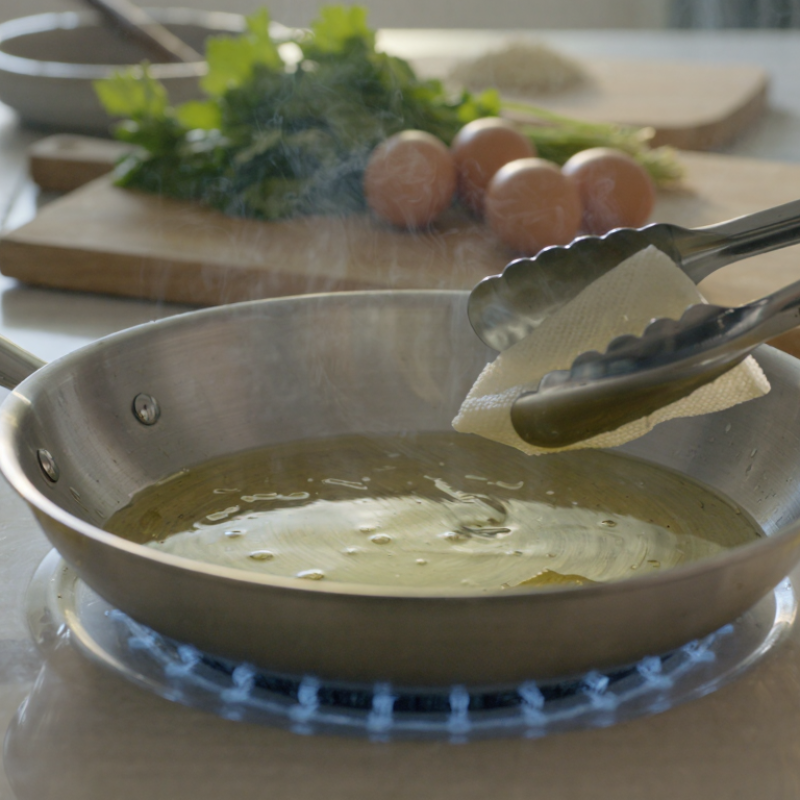
Start with a clean, completely dry pan. Place it over low to medium heat for a minute or two, so the metal warms evenly. Add about a teaspoon of a neutral cooking oil, then lift and tilt the pan to guide it across the base. Use a folded paper towel held with tongs to spread a very thin film over the cooking surface. The layer should look faintly glossy, not wet. Too much oil can turn sticky.
Keep the coating even. Pay attention to the center, where oil often pools, and the sloping sides, which are easy to miss. If you see a bead or a thick streak, wipe it away. A small amount is enough. Let the pan heat gently until the oil begins to shimmer, then take it off the burner. Avoid letting it smoke heavily; that can create an unpleasant smell and a patchy finish. I’ve found it easy to mistake “more oil” for “better coverage.” It usually isn’t.
Allow the pan to cool without rinsing it, then lightly wipe away any excess with a clean cloth or paper towel. The surface may show subtle color changes, and that is not necessarily a problem. Stainless steel does not need seasoning to work, and this thin coating is not a permanent nonstick layer. If it feels tacky, the oil was likely too thick; wash the pan and try again with less.
Start with a clean, completely dry stainless steel pan. Set it over medium-low heat for a minute or two. This gentle preheating drives off leftover moisture and helps the oil spread evenly. Let the pan warm, not roar. A few drops of water should sizzle away quickly, but don’t rely on this test if the pan is already very hot.
Turn off the burner and add about a teaspoon of high-smoke-point oil. Carefully wipe it across the cooking surface with a folded paper towel held in tongs. Keep the coating very thin. Too much oil can turn sticky or leave patchy spots; that’s an easy mistake to make. Return the pan to medium heat and watch closely. When the oil just begins to shimmer and give off a faint wisp, remove the pan from the heat and let it cool completely. Use ventilation, and never leave it unattended. The surface may darken slightly, but stainless steel won’t become permanently nonstick. Wash gently, dry it well, and repeat the thin-coat process if you like.
Heat the pan gently to build a thin, temporary seasoned surface.
Suggested timing is a practical starting point, not a fixed measurement; pans and burners vary. Apply only a thin film of oil, heat until it just begins to shimmer or faintly smoke, then turn off the heat and let the pan cool. Use ventilation and handle the hot pan carefully. A seasoned layer on stainless steel is temporary, not a permanent nonstick coating.
A stainless steel pan’s seasoning is a thin, temporary layer of heated oil, not a permanent nonstick coating. After washing, dry the pan completely, then warm it over low to medium heat. Add a few drops of neutral cooking oil and wipe them across the surface until it looks almost dry. Heat it gently until the oil forms a faint sheen, then let the pan cool. Less is better. Too much oil can turn sticky or patchy, an easy mistake when trying to build the layer quickly.
During cooking, preheat the pan and add a little oil before the food. Dry ingredients with a towel first; wet food is more likely to stick. Long cooks with tomato, vinegar, or wine may weaken the seasoning, so use a well-seasoned surface for those dishes only when needed. Clean the pan while it is warm, using mild soap and a soft sponge. For stuck bits, soak the pan briefly or loosen them with a wooden utensil rather than scraping hard. Dry it promptly. If the surface looks dull or food begins sticking more, wipe on a very thin film of oil after cleaning. The finish may stay uneven, and that is normal. Don’t chase a perfect shine.
Refined avocado, canola, grapeseed, or sunflower oil can work. Choose a neutral oil with a high smoke point. Check the label, since processing can change it.
Use just a few drops, or about a teaspoon. Wipe it into a barely glossy film. Use very little. Puddles may turn sticky.
Wash and dry it completely. Warm it over medium-low heat for a minute or two. The pan should feel warm, not fiercely hot.
Turn off the burner first. Add the oil, then wipe it across the surface with a folded paper towel held in tongs. Keep the coating thin.
Return the pan to medium heat and watch closely. When the oil shimmers and gives off a faint wisp, remove the pan from heat. Never leave it unattended.
Lower the heat and ventilate the room. Heavy smoke is not the goal. I used to think darker meant better; that isn’t a reliable guide.
No. A thin oil film may help food release for a while, but washing can remove it. Not permanent, though. Temperature control still matters more.
Yes, if you like. Let the pan cool completely, then wash and dry it gently. A small test batch is sensible; results can vary with your stove and pan.
Learning how to season a stainless steel frying pan begins with a clean, dry surface. Wash the pan to remove residue, then dry it thoroughly so moisture does not interfere with the oil. Choose a cooking oil with a high smoke point, and spread a very thin, even layer across the inside of the pan. Wipe away any excess; too much oil can leave a sticky, uneven finish.
Heat the pan gradually until the oil begins to shimmer, then let it cool completely. This process helps create a light seasoned surface that can make cooking and cleanup easier. With regular use, maintain the finish by avoiding harsh scrubbing when possible, washing the pan gently, and drying it after cleaning. If the surface becomes dull or food starts sticking more, clean the pan and repeat the process.

Kaus Kitchen