How to Get Oil Stains Off a Stainless Steel Pan?

Time:2026-09-16 Author:Aria
0%

Oil stains on stainless steel pans look harmless, yet they can become stubborn amber rings after repeated heating. Learning how to get oil stains off stainless steel pan surfaces requires more than aggressive scrubbing. Heat, oil type, water hardness, and cleaning timing all matter. A pan may appear clean while holding a thin, sticky film around its rivets or outer base.

Stainless steel remains a major professional kitchen material. The International Stainless Steel Forum reported global stainless steel crude production of about 60 million tonnes in 2023, showing its widespread use across food equipment and household cookware. NSF/ANSI 2 also establishes hygiene and cleanability requirements for commercial food equipment. These standards do not provide a single stain-removal recipe. They reinforce one practical point: cleaning should remove residue without damaging the surface.

Start with a cooled pan, warm water, and a small amount of dish detergent. Let the solution soften the oil first. Then use a non-scratch sponge, following the pan’s grain. For baked-on marks, a paste of baking soda and water can help. Avoid steel wool and harsh chlorine products. They may dull the finish or leave scratches that trap future residue. Never mix cleaning chemicals.

Small details matter. Dry the pan immediately. Water spots can hide remaining grease. A soft microfiber cloth reveals them. I would not promise instant results; some stains need two gentle treatments. That is less dramatic, but safer. The following guide explains how to get oil stains off stainless steel pan surfaces while protecting appearance, food-contact hygiene, and long-term performance.
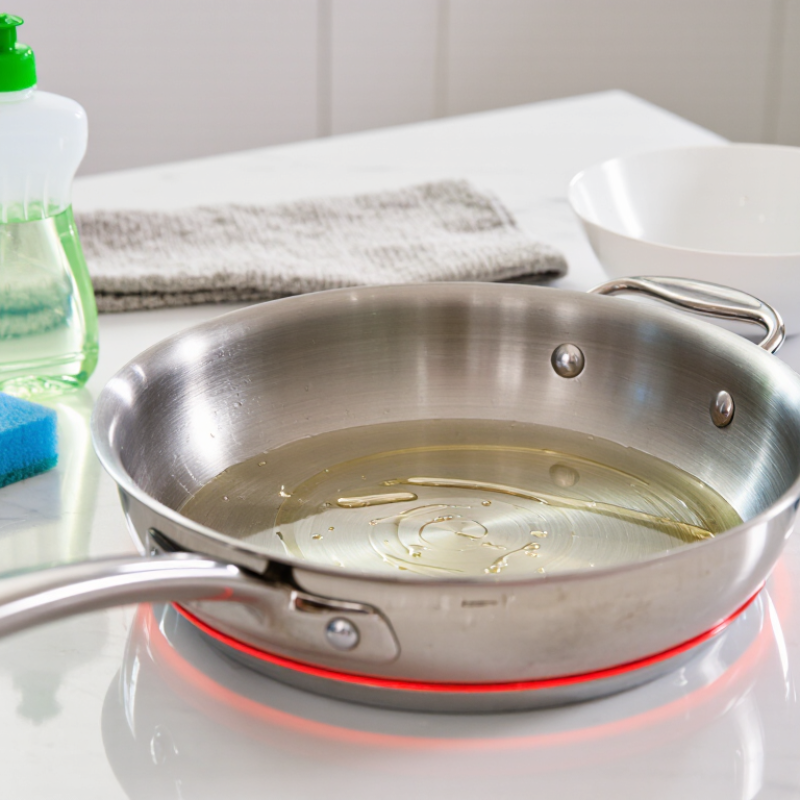
How to Get Oil Stains Off a Stainless Steel Pan?

Classify the Pan Surface: ASTM A240 304 Stainless Steel Contains 18–20% Chromium

How to Get Oil Stains Off a Stainless Steel Pan?

Identify the surface before cleaning. ASTM A240/A240M lists Type 304 stainless steel with 18–20% chromium and 8–10.5% nickel. Chromium supports a thin, self-repairing passive film. It does not dissolve oil, however. Oil marks usually come from greasy residue, overheating, or polymerized fat. In practical kitchen cleaning, let the pan cool first. Wipe away excess oil with a paper towel. Then wash it with warm water and a neutral dish detergent. Use a soft nylon pad, following the polishing direction. The Nickel Institute’s food-processing guidance recommends mild cleaners and thorough rinsing for stainless equipment. That advice matters because trapped detergent can leave dull streaks.

For darker, baked-on stains, spread a paste of baking soda and water over the area. Leave it for 10 minutes, then wipe gently. Rinse well and dry immediately with a microfiber cloth. ASTM A240 describes the material chemistry, not unlimited stain resistance. I once scrubbed too aggressively and created visible scratches. That was avoidable. Avoid steel wool, chlorine bleach, and chloride-rich powders. They can damage the passive surface or encourage corrosion at scratches. A clean pan may still show heat tint; that is different from an oil film.

Tips: Test the cleaner on a hidden edge. Use less pressure. If a brown patch remains, repeat the mild process instead of reaching for a harsher chemical. The American Iron and Steel Institute’s stainless-care guidance also emphasizes prompt rinsing and drying, especially after cleaning products contact the surface.

Soften Fresh Oil: Use 50–60°C Water and a Mild Dishwashing Detergent

How to Get Oil Stains Off a Stainless Steel Pan?

Fresh oil stains are easier to remove before they bake onto the metal. Let the pan cool until it feels warm, not dangerously hot. Add water heated to about 50–60°C and a small amount of mild dishwashing detergent. This temperature softens the oil without creating a harsh thermal shock. Leave the pan for 10–15 minutes. Then wipe the surface with a soft sponge, following the pan’s grain when visible.

Tips: Do not use boiling water. It may cause sudden temperature changes. Avoid steel wool and gritty powders, which can leave fine scratches. Rinse well, then dry with a clean towel to reduce water spots.

If a greasy film remains, repeat the warm soak instead of scrubbing harder. A second treatment is often gentler and more effective. I have found that very oily pans sometimes need extra time, especially around rivets and edges. That part is easy to miss. Use a soft nylon brush for those narrow areas, applying light pressure. Check the surface under bright light before storing the pan. A faint rainbow mark may be heat discoloration rather than oil, so detergent alone may not remove it.

Treat Baked-On Grease: Apply a pH 8.3 Baking Soda Paste for 15 Minutes

How to Get Oil Stains Off a Stainless Steel Pan?

Baked-on oil needs moisture, mild alkalinity, and patient contact time. Make a thick paste with three tablespoons of baking soda and enough water to resemble toothpaste. A water-based baking soda slurry usually measures near pH 8.3, according to data compiled by the U.S. National Library of Medicine’s PubChem database. This mild alkalinity helps loosen greasy residue without the harshness of strong caustic cleaners.

Spread the paste across the brown film, especially around the pan’s sides. Leave it for 15 minutes. Do not let it dry completely. The surface should stay slightly damp. The U.S. Department of Agriculture advises washing food-contact equipment with hot, soapy water, so rinse the loosened grease with hot water and dish soap afterward. Use a soft nylon pad, moving with the pan’s grain when visible. Avoid steel wool; it can leave tiny scratches that trap future residue.

For thick, black spots, repeat the treatment once. Scrubbing harder is not always better. I have found that a warm pan releases grease more easily, but it should never be dangerously hot when paste is applied. Stainless steel can discolor from overheating, and baking soda may leave a cloudy film if rinsed poorly. The 2022 FDA Food Code emphasizes cleanable food-contact surfaces, which makes a thorough final rinse more than cosmetic. If a faint shadow remains, accept that one treatment may not restore a factory finish.

Baking Soda Paste Treatment for Baked-On Grease

The procedure uses a mildly alkaline baking soda paste with a pH of 8.3 and a 15-minute contact time before rinsing.

These values describe the treatment conditions, not a measured percentage of grease removal.

Scrub Without Damage: Choose a Nonabrasive Nylon Pad Instead of Steel Wool

How to Get Oil Stains Off a Stainless Steel Pan?

Let the pan cool completely before cleaning it. Wipe away excess oil with a paper towel. Never pour greasy residue directly into the drain. Add warm water and a small amount of dish soap, then let the pan soak for ten minutes. This softens the sticky film without forcing you to scrub aggressively.

I once used steel wool on a dark oil mark. It worked quickly, but it left faint scratches around the cooking surface. That was an avoidable mistake. Use a nonabrasive nylon pad instead. Its flexible fibers can lift baked-on oil while protecting the smooth stainless steel finish. Sprinkle a little baking soda over the damp area, then rub gently in the direction of the pan’s grain. Keep the pressure light. Really light.

Rinse the pad often, because trapped grease can spread across the metal. For stubborn stains, repeat the process instead of pressing harder. A soft nylon brush can reach the edges near rivets and handles. Avoid chlorine-based cleaners, harsh scouring powders, and metal scrubbers. They may dull the surface or create tiny scratches that hold future residue. Dry the pan immediately with a clean towel. Water spots can make the surface look stained, even after the oil is gone.

Rinse and Protect the Finish: Avoid Chloride Cleaners and Dry Completely

How to Get Oil Stains Off a Stainless Steel Pan?

Fresh oil stains are easier to remove than baked-on residue. I usually let the pan cool, then wipe away loose oil with a paper towel. This prevents greasy water from spreading across the surface. Add warm water and a small amount of mild dish soap. Let the pan soak for ten minutes.

Use a soft sponge or a non-scratch nylon pad. Rub with the pan’s grain, not in random circles. For stubborn spots, make a gentle paste with baking soda and water. Apply it briefly, then rinse thoroughly. Avoid steel wool, harsh scouring powders, and chloride-containing cleaners. Chloride can damage stainless steel and may encourage pitting, especially when residue remains on the surface.

Rinse under clean running water until no slippery film remains. This step is often skipped. I once dried a pan too quickly and later noticed cloudy marks near the rim. The cleaner had not been fully removed. Dry the pan immediately with a clean, soft towel, including the handle and rolled edge. Air-drying can leave mineral spots from hard water. Check the surface under bright light. If a faint stain remains, repeat the gentle process instead of applying stronger chemicals. Most cookware care guidance favors mild cleaning, complete rinsing, and prompt drying because these habits protect the finish over time.

FAQS

How should I remove fresh oil from a stainless steel pan?

Let the pan cool until it feels warm, not dangerously hot. Wipe away loose oil with a paper towel. Add 50–60°C water and mild dish detergent. Soak for 10–15 minutes, then wipe with a soft sponge.

Why should I avoid boiling water?

Boiling water can create sudden temperature changes. That may stress the pan’s surface. Warm water softens oil more gently.

What tools are safest for cleaning oil stains?

Use a soft sponge, non-scratch nylon pad, or soft nylon brush. Follow the visible grain. Avoid steel wool and gritty powders.

How can I clean oil around rivets and edges?

Apply warm soapy water around narrow areas. Use a soft nylon brush with light pressure. These spots are easy to miss.

What should I do if a greasy film remains?

Repeat the warm soak instead of scrubbing harder. A second gentle treatment often works better. Patience helps here.

Can baking soda help with stubborn oil marks?

Mix baking soda with a little water to form a gentle paste. Apply it briefly, then rinse thoroughly. Do not rub aggressively.

Why is thorough rinsing important?

Leftover cleaner can create a slippery film or cloudy marks. Rinse under clean running water until the surface feels clean. I sometimes rush this step.

How should I dry the pan after cleaning?

Dry the pan immediately with a clean, soft towel. Wipe the handle, rim, and rolled edge. Air-drying can leave mineral spots.

Is a faint rainbow mark always an oil stain?

No. It may be heat discoloration rather than oil. Check the surface under bright light before repeating detergent treatment. Stronger chemicals may not solve it.

Conclusion

Cleaning oil from a stainless steel pan starts with understanding its surface. Many pans are made from ASTM A240 304 stainless steel, which contains approximately 18–20% chromium and can resist corrosion when properly maintained. For fresh oil stains, soak the pan with 50–60°C water and a mild dishwashing detergent to loosen the residue. This gentle method helps remove grease without dulling the metal.

For baked-on oil, spread a paste made from baking soda and a small amount of water over the affected area and let it sit for about 15 minutes. Then scrub gently with a nonabrasive nylon pad rather than steel wool, which may leave scratches. Rinse the pan thoroughly, avoid cleaners containing chlorides, and dry it completely to help prevent water marks and maintain the finish. Following these steps provides a safe, practical approach to how to get oil stains off stainless steel pan while preserving its appearance.

Aria

Aria

Aria is a dedicated marketing professional with a deep passion for innovative strategies and a keen understanding of our company's product offerings. With a wealth of experience in the industry, Aria excels at crafting engaging content that highlights the unique features and benefits of our......