Why Is My Stainless Steel Pan Burnt and How Do I Clean It?

Time:2026-11-09 Author:Ethan
0%

A blackened stainless steel pan can look ruined, but most burnt-on residue is removable. The key is identifying what burned: oil forms a sticky film, while food starches can leave stubborn brown patches. The right cleaning method depends on the residue, not just its color.

There is a safety reason to pay attention to heat, too. The National Fire Protection Association’s Home Cooking Fires report found that cooking equipment was involved in 49% of reported home fires. NFPA research analyst Marty Ahrens highlights a practical warning: “Unattended cooking is the leading factor contributing to home cooking fires.” That statistic concerns fire prevention, not pan-cleaning performance, but it underscores why a pan should not be left heating while you step away.

So, how to clean burnt stainless steel pan surfaces without scratching them or reaching for harsh chemicals? Start with a cool pan, warm water, and dish soap. For stubborn residue, simmering water in the pan can loosen the burned layer; a nonabrasive cleaner and soft sponge can help with what remains. Avoid sudden temperature changes, which can warp cookware, and test any cleaner on a small area first. No frantic scrubbing.

This guide explains why stainless steel burns, which marks are ordinary discoloration, and how to clean the pan safely. A few brown specks may remain after the first wash. That is not always a failed clean.
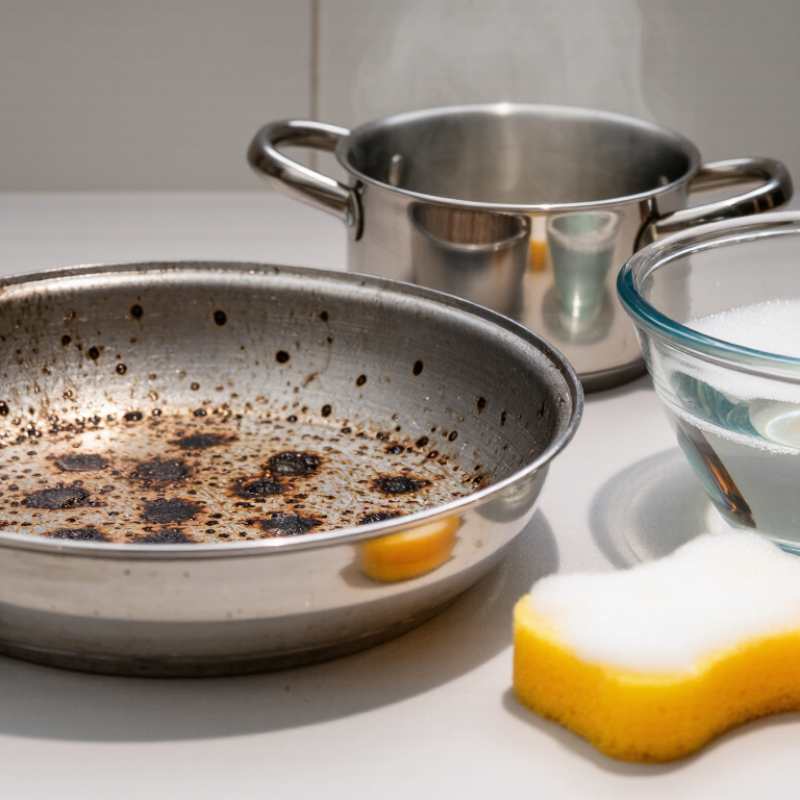
Why Is My Stainless Steel Pan Burnt and How Do I Clean It?

What Causes Stainless Steel Pans to Burn?

A stainless steel pan usually burns because heat builds faster than food or oil can absorb it. Stainless steel spreads heat less evenly than many cooks expect. ASM Handbook material data puts 304 stainless steel’s thermal conductivity near 16 W/m·K, compared with roughly 237 W/m·K for aluminum. That gap can leave hot spots over a burner, where oil darkens and food scorches while other areas remain cooler. It happens quickly.

High heat and an empty pan make the problem worse. Oil can pass its smoke point, break down, and leave a sticky brown film. Proteins, starches, and sugary marinades also cling when the pan is too cool at first, then burn as cooking continues. Crowding food can release moisture and lower the pan’s temperature, encouraging sticking before the surface heats again. Burner size matters, too: a small flame under a wide pan can create uneven heating. The details vary.

The numbers explain part of the problem, not every kitchen result. Pan thickness, burner output, and how long the pan preheats all change the outcome. A visible shimmer in the oil is a practical cue, but it is not a precise temperature reading. For a moment, the pan may look ready while a concentrated burner hotspot is already scorching residue.

How to Assess Burnt Residue and Pan Condition

Let the pan cool completely before judging the damage. Under bright light, look for whether the dark area is a raised, rough layer or a flat change in color. Greasy, uneven patches often point to burnt food or oil. A smooth rainbow tint can come from heat and does not necessarily mean the steel is damaged. Look closely.

Run a fingertip gently across the cooled surface. If residue feels raised, try soaking the pan in warm water with dish soap, then wipe with a non-scratch sponge. Avoid scraping hard before you know what you are dealing with. I once mistook a smooth brown stain for stuck food; more force only made the job harder. A small test area is wiser.

Check the pan itself, not just the stain. Deep pits, cracks, a badly warped base, or a loose handle may affect safe, even cooking. Minor scratches and discoloration are common in stainless steel and do not automatically make a pan unusable. If the surface remains rough after gentle cleaning, or damage appears structural, stop and assess it more carefully. A clean-looking pan is not always a sound pan.

Why Is My Stainless Steel Pan Burnt—and How Do I Clean It?

Assess burnt residue and check whether the pan itself may be damaged.

How to read this guide: The 1–3 scores are a practical triage scale, not laboratory measurements. Stuck-on food or rainbow heat tint is usually a cleaning issue; pitting or a warped base can indicate physical damage. Let the pan cool before cleaning, and inspect the surface again after removing residue.

What You Need to Clean a Burnt Stainless Steel Pan

What You Need to Clean a Burnt Stainless Steel Pan

Gather warm water, dish soap, baking soda, white vinegar, a wooden spatula, and a non-scratch sponge. Keep it simple. Add enough water to cover the burnt patch, then simmer gently for several minutes. Loosen softened food with the spatula, not a knife. Drain the pan, sprinkle baking soda over the stains, and rub with a damp sponge. For stubborn spots, add a little vinegar; expect fizzing, but never mix vinegar with bleach. Rinse thoroughly and dry with a soft towel to limit water marks.

The pan’s surface deserves care. World Stainless technical guidance identifies 10.5% chromium as the minimum for stainless steel, while the Nickel Institute lists roughly 18% chromium in typical 304 stainless steel. That chromium helps form a protective surface layer, so aggressive scouring can be counterproductive. Skip steel wool and chlorine bleach, which may scratch or damage the surface. A common mistake is scrubbing before soaking; it feels productive, but often spreads residue. If a shadow remains, repeat the soak rather than pressing harder. Check your pan maker’s care instructions, since finishes and construction can vary.

How to Remove Burnt Residue Step by Step

Let the pan cool completely before cleaning; pouring cold water into a hot pan can cause warping. Remove loose food, then add warm water and a little dish soap. Soak for 15 to 20 minutes. Let it cool. For stubborn residue, simmer a shallow layer of water for five minutes, then loosen the softened bits with a wooden or silicone spatula.

Drain the pan and sprinkle baking soda over the burnt area. Add a few drops of water to make a paste, then rub gently with a soft sponge, working with the grain of the steel. It is tempting to scrape harder when a dark patch remains; that can leave scratches without removing the residue faster. Rinse well and dry with a clean towel to avoid water marks. Repeat the soak if needed.

World Stainless explains that stainless steel contains at least 10.5% chromium, which helps form a protective surface layer. That technical detail is one reason gentle cleaning matters: harsh abrasives can damage the finish, while chloride bleach may encourage pitting. Avoid mixing cleaning products. If the stain remains, give the pan another short soak rather than reaching for steel wool. Some burnt marks take patience, and I may still underestimate how long a soak needs.

How to Prevent Food from Burning in the Pan

Stainless steel rarely needs maximum heat; a hot, empty pan can scorch oil before food even lands. Start at medium, preheat for two to three minutes, then add a thin film of oil. Wait until it shimmers, not smokes. Dry food first. Surface moisture cools the pan, encourages sticking, and can make oil spit. Pat proteins dry, and let refrigerated ingredients warm briefly while you prep. Leave space between pieces; crowded food releases steam and browns unevenly. Turn only when food releases easily; scraping early often tears the crust. For eggs or delicate fish, begin lower and adjust slowly.

The NFPA’s 2020 Home Cooking Fires report found cooking equipment involved in 49% of reported U.S. home fires. Its data cover 2014–2018, not burnt meals, but staying nearby matters. Lower the burner if oil smokes or brown residue darkens quickly. A little browning is useful; black residue signals excess heat. Honestly, it takes practice. My instinct might be to turn up the burner when food sticks, but that often makes the problem worse.

FAQS

Why does a stainless steel pan burn food?

Stainless steel can develop hot spots because it spreads heat less evenly than aluminum. Oil or food may scorch in one area while another stays cooler. It happens fast.

Can an empty pan over high heat cause burnt residue?

Yes. An empty pan heats quickly, and oil can pass its smoke point. Add oil and food only when the pan is ready, not after prolonged heating.

How can I tell burnt residue from heat discoloration?

Let the pan cool. Raised, rough patches often indicate residue; smooth rainbow colors may be heat tint. Check a small area gently before cleaning the whole pan.

What is a gentle way to loosen burnt food?

Soak the cooled pan in warm, soapy water for 15 to 20 minutes. For stubborn bits, simmer a shallow layer of water for five minutes, then use a wooden or silicone spatula.

How should I use baking soda on a burnt pan?

Make a paste with baking soda and a few drops of water. Rub gently with a soft sponge, following the steel’s grain. Rinse and dry with a clean towel.

Should I scrape a dark patch with steel wool?

Avoid steel wool and hard scraping; they can scratch the finish without removing residue faster. I sometimes expect a stain to lift sooner than it does. A second soak may help.

When might a pan need closer inspection?

Look for deep pits, cracks, a badly warped base, or a loose handle. Minor scratches and color changes do not automatically make a pan unusable. Check carefully.

Can cleaning products damage stainless steel?

Harsh abrasives may damage the finish, and chlorine bleach can encourage pitting. Never mix cleaning products. Gentle cleaning is safer.

Conclusion

Burnt residue on a stainless steel pan often forms when the pan gets too hot, food is left unattended, or cooking oil and food particles build up on the surface. Before cleaning, let the pan cool and check whether the discoloration is loose residue, stubborn carbonized food, or damage to the pan’s surface. Gather warm water, dish soap, a non-abrasive sponge, and baking soda to help loosen the mess without scratching the steel.

To learn how to clean burnt stainless steel pan residue, soak the pan in warm, soapy water, then gently scrub. For tougher spots, simmer water in the pan to soften the buildup, or make a baking soda paste and apply it to the affected area before rinsing and drying thoroughly. Avoid harsh scraping, which may leave scratches. Prevent future burning by preheating gradually, using suitable heat, adding oil at the right time, and stirring or monitoring food as it cooks.

Ethan

Ethan

Ethan is a seasoned marketing professional with a deep expertise in our company's innovative product line. With a passion for sharing knowledge and insights, he takes the lead in regularly updating our corporate blog, where he explores industry trends, product features, and effective marketing......