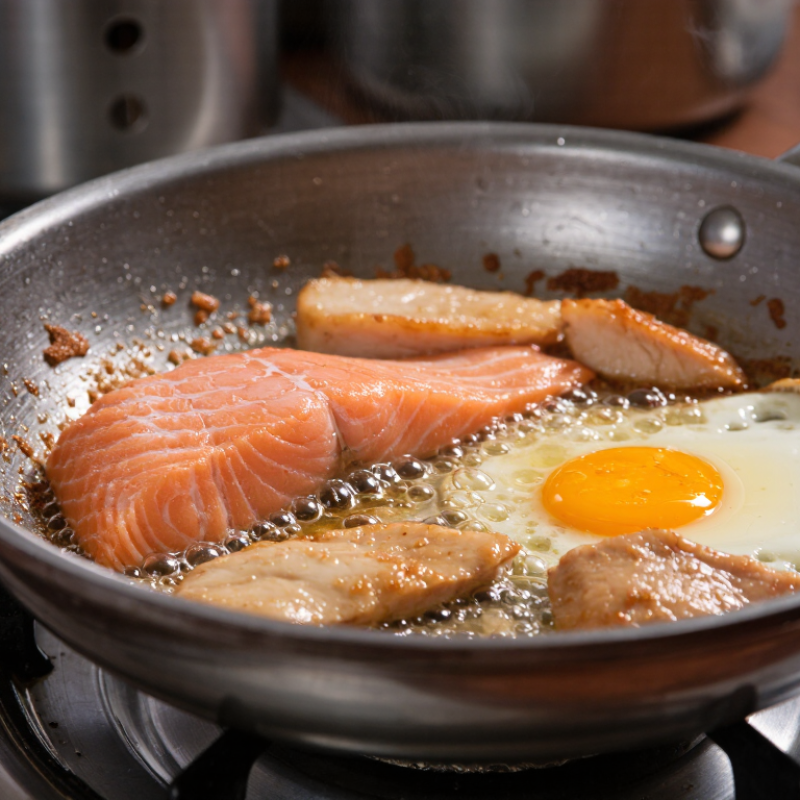
Why does food stick to stainless steel, even when the pan looks clean and the oil is already in? The answer usually involves heat, moisture, and timing—not a defective pan. Stainless steel has no slippery coating, so proteins in eggs, fish, or meat can grip the metal while their surfaces are still wet and unseared. The result is familiar: a fillet tears when lifted, or browned bits cling stubbornly to the cooking surface.
Material data helps explain why temperature matters. Outokumpu’s technical data for common austenitic stainless steels places thermal conductivity near 15 W/m·K, though values vary by grade and temperature. Aluminum conducts heat much faster, which is one reason many stainless pans use an aluminum core or layered base. That design can improve heat distribution, but it cannot prevent sticking by itself. A cold pan, crowded ingredients, or food moved too soon can still leave proteins attached. Small details matter.
A useful starting routine is to preheat the pan, add a thin film of oil, then give the food time to form a browned surface before turning it. Look for a gentle sizzle, not smoke. If the food resists, pause; it may release as the crust develops. Still, heat alone is not the whole story. Pan thickness, burner strength, food moisture, and cooking habits all change the result. Even experienced cooks sometimes misjudge the moment. Understanding these variables makes stainless steel less mysterious—and helps explain why the same pan behaves differently from one meal to the next.
AISI 304 Conducts Heat at About 16.2 W/m·K, Versus Aluminum’s ~205 W/m·K
Stainless steel can make food stick because it spreads heat much less readily than aluminum. AISI 304 has a thermal conductivity of about 16.2 W/m·K, while aluminum is roughly 205 W/m·K. These are typical figures, not guarantees for every pan; alloy and temperature can change the values. That gap matters. In a thin, single-layer steel pan, heat may concentrate above the burner while nearby areas stay cooler. Food then cooks unevenly, and proteins can cling to the surface before they set. Conductivity is only part of the story, though. A pan’s thickness and layered construction also affect how evenly it heats.
A practical fix is steady, moderate preheating rather than turning the burner to high. Add a little oil when the pan is warm; it should shimmer, not smoke. Pat ingredients dry, and give them time to form a browned surface before trying to turn them. They often release more easily then. For eggs or delicate fish, lower heat and a little patience help. Even careful cooks misjudge the timing. A stubborn patch can still happen, especially when food is wet or the pan has hot spots. The conductivity numbers explain why heat management matters, but they cannot predict every meal.
Why Does Food Stick to Stainless Steel Pans?
Thermal conductivity of AISI 304 stainless steel and aluminum at approximately room temperature
Aluminum conducts heat much faster than AISI 304 stainless steel, helping spread heat more evenly. Stainless steel can develop localized hot and cool areas, so food may stick if the pan is not properly preheated or the food is moved before it releases. Actual results also depend on pan construction, cooking temperature, and food moisture.
Values are approximate typical thermal conductivity at room temperature; aluminum value varies with purity and alloy.
How Stainless Steel’s 18–20% Chromium Content Shapes Its Surface
Many stainless-steel pans contain roughly 18% chromium, while some grades approach 20%. Chromium is not a nonstick ingredient. When exposed to air, it forms an extremely thin chromium-oxide film across the surface. This film helps resist rust and corrosion, and it can reform after minor damage. It is invisible. The pan’s protective chemistry does not make its cooking surface slippery.
Food sticks because the oxide layer is not designed to repel it. As egg or fish proteins heat, they change structure and cling to the metal, especially when the pan is cool or crowded. Tiny surface irregularities can add to that contact. The chromium content protects the steel, but it does not prevent these cooking reactions. That distinction is easy to miss.
Moderate preheating, dry ingredients, and a thin layer of oil can reduce sticking. A drop of water that gathers and moves across the pan can suggest it is hot, but this test is imperfect; pan thickness and burner strength affect the result. Add food too early, and it may grab the surface. Wait a little, and it often releases as browning develops. The timing takes practice.
Why Proteins in Meat and Eggs Bond to Bare, Unseasoned Steel
Why Does Food Stick to Stainless Steel Pans?
Why Proteins in Meat and Eggs Bond to Bare, Unseasoned Steel
Meat and eggs stick because their proteins can attach to the thin oxide layer covering stainless steel. The layer is normal, even on a clean pan. When raw protein touches a cool or unevenly heated surface, it spreads into tiny surface irregularities and makes close contact with the metal. Then heat changes the proteins’ structure, helping them cling. “Bond” is a useful shorthand, though it does not mean every protein forms a permanent chemical bond with steel.
A bare pan has no seasoned coating to separate food from its surface. Moisture makes the problem more noticeable: a damp steak can cool the pan, while egg white quickly sets where it touches hot steel. I’ve found that patience matters more than force. Let the pan heat evenly, dry the food’s surface, and add a thin film of oil. A water droplet that gathers and glides can suggest the pan is hot, but it is not a perfect temperature test.
Give the food time to brown. As a crust forms, it often releases more easily; prying too soon can tear it and leave protein behind. Not every pan behaves alike, and burner strength changes the timing. A little sticking can still happen. That is the catch.
Why Does Food Stick to Stainless Steel Pans? Why Proteins in Meat and Eggs Bond to Bare, Unseasoned Steel
| Food or factor |
Why sticking happens |
What you may notice |
Practical way to reduce sticking |
| Meat proteins |
As meat heats, its proteins change structure. Moist proteins can make close contact with the pan’s microscopic surface irregularities and adhere temporarily. |
The meat resists when you try to lift it early, especially before a browned surface has formed. |
Pat the surface dry, preheat the pan over moderate heat, add cooking fat, and allow the meat to brown before turning it. If it resists, give it more time rather than forcing it. |
| Egg proteins |
Egg proteins set quickly when heated and can attach to exposed steel. Delicate eggs have less structure to release cleanly than a well-browned piece of meat. |
Egg white may set onto the pan soon after it is added, leaving thin patches behind. |
Use moderate-low heat and a generous, even coating of butter or oil. Add the eggs after the pan has warmed, and move them gently as they begin to set. |
| Pan temperature |
A pan that is too cool can encourage food to linger and release moisture; excessive heat can make proteins seize or burn before they release. |
Food may stick, steam, scorch, or brown unevenly depending on the heat and the food. |
Preheat gradually and choose heat suited to the food. Stainless steel retains heat, so adjust the burner if browning becomes too rapid. |
| Surface moisture |
Water on food cools the pan locally and can interfere with even browning. Moisture also makes the contact between food and pan less predictable. |
Meat may steam instead of browning, while wet ingredients can cause splattering. |
Blot meat and other ingredients dry when appropriate. Avoid overcrowding the pan, which releases moisture and lowers the cooking surface temperature. |
| Cooking fat |
Oil or butter creates a lubricating layer that reduces direct contact between food proteins and the steel, but it does not make stainless steel permanently nonstick. |
Food is more likely to stick where the pan or ingredients are dry. |
Once the pan is warm, add enough fat to coat the cooking area. Add more if the surface becomes dry during cooking. |
| Unseasoned stainless steel |
Unlike seasoned cast iron, bare stainless steel has no built-up seasoning layer. Its durable cooking surface can still have microscopic irregularities that food can contact. |
Protein-rich foods may adhere even when the pan looks smooth and clean. |
Use appropriate preheating, cooking fat, and timing. Stainless steel can develop a browned fond; loosen it with liquid during deglazing after cooking. |
Key point: Sticking is usually a result of protein contact, temperature, moisture, and timing—not proof that a stainless steel pan is defective. Food often releases more easily after its surface has browned and formed a crust.
How Uneven Pan Temperatures Create Hot Spots and Localized Sticking
Stainless steel can heat unevenly, especially when a small burner warms only the center of a wide pan. The metal directly above the flame or heating element gets hot first. Cooler areas remain around the edges. That temperature contrast creates hot spots, even when the pan feels warm overall.
Food reacts differently across those zones. A piece of chicken over a hot spot may lose moisture quickly, while its cooler edge stays pale. The dry, heated proteins can grip the steel before a browned crust forms. In a cooler area, food may release more easily—but it can also cook unevenly. Pan thickness, burner size, and how long the pan preheats all matter. A thin pan often shows temperature changes faster. Some pans have layered metal cores that spread heat more evenly, though they cannot eliminate every hot spot.
Watch the oil, not just the clock. When it flows easily and shimmers lightly, the pan is generally ready; smoking oil means it is too hot. Add food in a single layer, leaving space between pieces, and give it time to brown before testing whether it releases. I still sometimes rush that part. A quick scrape can tear the crust, while waiting a little longer often lets the food lift cleanly.
How Preheating and Oil Help Limit Food-to-Steel Contact
Food sticks when wet proteins touch the pan and bond before a browned crust forms. Preheating gives the steel time to warm more evenly. Outokumpu’s Stainless Steel Handbook reports thermal conductivity near 15 W/m·K for austenitic stainless steel at room temperature. Steel therefore responds less quickly to heat changes than many cooking surfaces. A cold spot can still catch an egg or fish. Pat ingredients dry, then let the pan heat over medium heat; rushing this step often causes trouble.
Add a thin film of oil once the pan is warm. It fills tiny surface irregularities and reduces direct food-to-steel contact. Wait until the oil shimmers, not smokes. Lay food down gently, then leave it alone for a short time. As proteins brown, they often release more easily. This is not a guarantee: crowded pans cool quickly, and sugary marinades can stick or scorch. I’d treat the water-drop test cautiously, too; a dramatic skitter can mean the pan is hotter than needed.
Tips: Dry food well. Preheat gradually. Use just enough oil to coat the surface. If food resists when lifted, give it another few seconds rather than scraping.
Conclusion
Why does food stick to stainless steel? The answer lies in the pan’s surface and how it distributes heat. AISI 304 stainless steel conducts heat at roughly 16.2 W/m·K, far less than aluminum at about 205 W/m·K. As a result, heat may spread unevenly, creating hotter areas where food can begin to stick before the rest of the pan is ready. Stainless steel’s 18–20% chromium content forms a protective surface layer, but it does not make the pan naturally nonstick.
Proteins in foods such as meat and eggs can bond to bare, unseasoned steel, especially when they meet a pan that is too cool or has uneven temperatures. Proper preheating helps the surface warm more consistently, while a thin layer of oil creates a barrier between the food and the steel. Together, steady heat, suitable timing, and enough oil can reduce sticking and make cooking easier.

 Kaus Kitchen