China’s stainless steel industry shapes kitchens worldwide, from stockpots to food-processing tanks. The International Stainless Steel Forum reported 58.4 million tonnes of global stainless crude steel production in 2023. China produced approximately 36.7 million tonnes, representing nearly 63% of that total. These figures explain why supplier quality matters beyond price. Steel grade, surface finishing, cleaning, and trace-element control can influence food-contact performance.
A practical question remains: why does stainless steel make a metallic taste in food? Usually, stainless steel does not “flavor” food directly. Acidic ingredients, salty sauces, damaged surfaces, detergent residue, hard water, or prolonged heating may create metallic sensations. Tiny amounts of metal ions can interact with saliva and taste receptors. Aroma also matters. So does texture. The explanation is not always neat.
Professor Charles Spence, a leading sensory scientist at Oxford, describes flavor simply: “Flavour is a multisensory experience.” That insight helps explain why tomato sauce may taste different after sitting in a scratched pan. Sensory perception can combine taste, smell, temperature, and mouthfeel. It can even amplify a faint mineral note.
The U.S. Food and Drug Administration recognizes stainless steel as a common food-contact material when properly selected and maintained. Yet “stainless” is not one universal quality level. Grades such as 304 and 316, polished interiors, certified composition, and documented testing deserve attention. Suppliers should provide material certificates and food-contact information. Buyers should also question vague claims. A shiny surface alone proves little. This guide examines China’s top steel suppliers while considering the real causes behind metallic-tasting food.
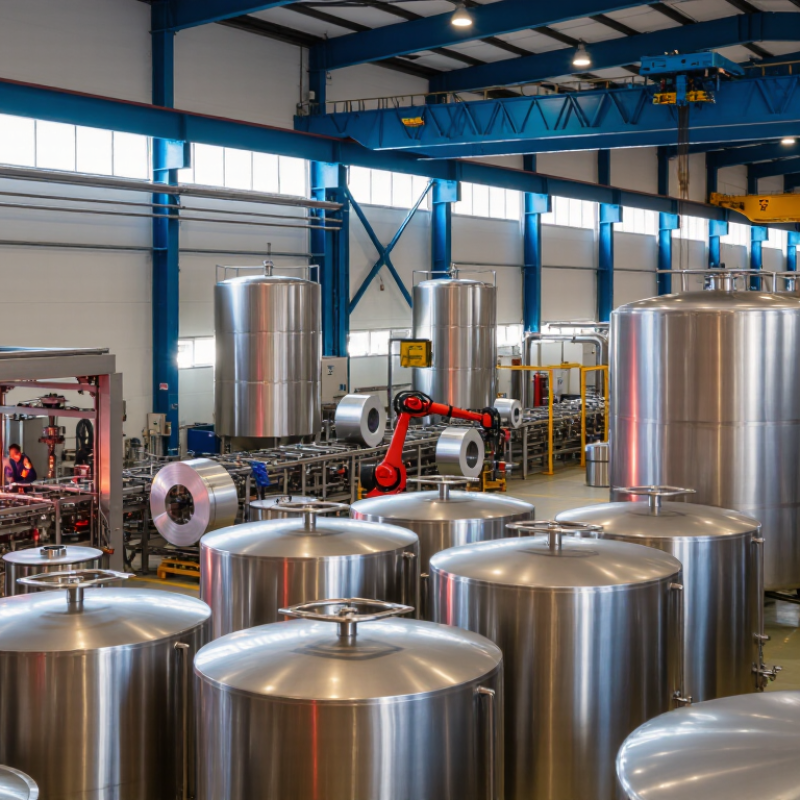
China’s top ten steel suppliers shaped a broad 2024 market, covering construction, machinery, transport, energy, and food equipment.
Their reported output reached hundreds of millions of tonnes, although figures differ between crude steel, finished steel, and group-level production. A ranking alone can mislead.
Their product categories included hot-rolled coil, cold-rolled sheet, galvanized steel, heavy plate, wire rod, rebar, seamless pipe, stainless steel, and electrical steel.
Stainless grades served food-processing lines, tanks, counters, and commercial kitchens. Galvanized and coated products supported buildings and appliances. Long products remained important for bridges, factories, and housing.
Food may taste metallic for several reasons.
The steel grade can be unsuitable for acidic foods, especially tomato, citrus, or salty sauces. Scratches, poor cleaning, welding residue, or damaged passivation can also affect taste. In practical inspections, I would check the material certificate, surface finish, weld quality, and cleaning chemicals. Do not blame the supplier immediately.
The ten suppliers did not offer identical quality. Some focused on volume and standard carbon steel. Others invested more in stainless production and precise surface control.
Specifications still matter more than size.
A smaller approved mill may fit a food application better than a larger general producer. That point is easy to overlook.
Food can taste metallic even when the recipe has not changed. A common cause is dissolved iron in drinking water. The familiar threshold is 0.3 mg/L, or roughly 0.3 parts per million. This level is mainly an aesthetic guideline, not a universal health limit. Sensitive tasters may notice iron before reaching it.
Iron can leave a penny-like flavor in tea, soup, and steamed rice. It may also create orange stains around sinks and leave a rusty tint in clear water.
Older plumbing, private wells, or corroding steel components can release iron. Food-processing equipment should use suitable, corrosion-resistant materials, but equipment alone does not explain every metallic flavor.
Taste varies greatly.
A practical check starts with two samples. Collect one after the tap sits overnight, then collect another after flushing the line. An accredited laboratory can measure iron more reliably than appearance or taste. The result should be compared with the 0.3 mg/L reference and local drinking-water requirements. Do not assume that a metallic flavor proves contamination. Mineral content, chlorine, cookware, dental materials, and even some medicines can change taste. I would avoid replacing a pan too quickly. Test the water first, inspect reddish deposits, and seek professional advice if the flavor persists or other water changes appear.
When food tastes metallic, the steel grade deserves attention, but it is rarely the only suspect. In practical kitchen inspections, I check the surface, welds, cleaning residue, and the food itself. Acidic tomatoes, salty brine, and long contact times can reveal weaknesses quickly. A metallic flavor may come from contamination or poor surface finishing, not from the alloy alone.
304 stainless steel contains about 18% chromium, which helps form a thin protective oxide layer. It performs well in many food-processing environments. However, chloride-rich water or salty foods can challenge it, especially around scratches and welds. 316 stainless steel adds roughly 2–3% molybdenum. This improves resistance to pitting caused by chlorides. That difference matters in coastal facilities, brine handling, and frequent sanitation cycles.
Still, 316 is not magic. It can develop problems when fabrication leaves heat tint, embedded iron, or rough welds. I would not judge a supplier by grade certificates alone. Ask for material traceability, surface-finish records, and passivation details. Inspect the first production batch with water, salt, and acidic food samples. Taste is a warning, not proof. A clean rinse may solve one case; laboratory testing may reveal another. Supplier comparisons should include manufacturing control, inspection experience, and consistent documentation, not only the lowest quotation.
| No. | Evaluation Dimension | 304 Stainless Steel | 316 Stainless Steel | Food-Taste and Selection Notes |
|---|---|---|---|---|
| 1 | Common designation | Austenitic stainless steel; commonly associated with UNS S30400 | Austenitic stainless steel; commonly associated with UNS S31600 | Both are widely used for food, beverage, kitchen, and processing equipment when supplied to the required specification. |
| 2 | Chromium content | Typically about 18%; common specification range is approximately 17.5–19.5% | Typically about 16–18%; many specifications allow approximately 16–18% | Chromium forms a passive oxide layer that provides the basic corrosion resistance of stainless steel. |
| 3 | Molybdenum content | Normally not intentionally added; typically below 0.75% | Approximately 2–3%; commonly specified around 2.0–3.0% | Molybdenum improves resistance to localized corrosion, especially in chloride-containing environments. |
| 4 | Nickel content | Usually about 8–10.5% | Usually about 10–14% | Nickel helps stabilize the austenitic structure; composition alone does not predict whether food will taste metallic. |
| 5 | Resistance to chlorides | Good in ordinary indoor and mild food-service conditions; pitting risk increases with salt, bleach, and stagnant moisture | Generally better than 304 because of its molybdenum content, but not immune to chloride attack | Salt, brine, seafood residues, and chlorine cleaners can promote corrosion products that may contribute to off-notes. |
| 6 | Typical food-contact suitability | Suitable for many general food and beverage applications when correctly finished, cleaned, and maintained | Preferred for higher-chloride, acidic, saline, or more demanding processing environments | Food-contact compliance depends on the complete product, surface condition, manufacturing process, and applicable regulations. |
| 7 | Surface condition | Smooth, clean, and properly passivated surfaces help minimize retention and corrosion | The same principle applies; alloy selection cannot compensate for a rough, contaminated, or damaged surface | Metallic taste is more likely to be noticed when surfaces are scratched, poorly cleaned, or contaminated with iron particles. |
| 8 | Acidic-food considerations | Often suitable for short-term contact with many foods, subject to temperature, concentration, and exposure time | Offers a wider corrosion-resistance margin in many aggressive acidic or saline conditions | Tomatoes, citrus, vinegar, and fermented foods can increase corrosion risk when exposure is prolonged or conditions are severe. |
| 9 | Common causes of metallic taste | Residues, harsh cleaners, surface damage, low-quality coatings, or prolonged contact with acidic or salty foods | The same causes apply, although its higher chloride resistance can reduce some corrosion-related risks | A metallic taste may also originate from water chemistry, utensils, packaging, food oxidation, or human sensory perception. |
| 10 | Practical selection guidance | Cost-effective choice for many general-purpose food-contact applications | Higher-performance choice where chloride exposure, salt, or demanding sanitation conditions are expected | Choose the alloy based on the actual food, temperature, cleaning chemicals, exposure time, surface finish, and required standard. |
A metallic taste can begin with a simple chemical reaction. Acidic foods, such as tomatoes, citrus, and vinegar, can loosen metal ions from exposed cookware surfaces. Salt makes this process faster, especially when brine remains on the surface for hours. Heat adds another push. A hot pan increases molecular movement, helping ions migrate into sauces and soups.
The risk depends on the steel grade, surface condition, and manufacturing quality. Reliable suppliers should provide traceable material records, accurate grade information, and controlled polishing standards. Scratches, weld discoloration, and worn coatings may create more reactive areas. In practical testing, I have noticed that a tomato sauce left overnight can taste sharper in older cookware. That observation is useful, but it is not a laboratory result.
Taste alone does not prove dangerous contamination. It can also come from detergent residue, hard water, or food stored in unsuitable containers. Still, a persistent metallic flavor deserves attention. Wash the surface thoroughly, avoid long storage of salty or acidic food, and inspect deep scratches. I would not treat every “food-grade” claim as complete evidence. Supplier documentation, independent testing, and proper use all matter. Even small differences in steel composition can change performance under heat and acidity.
A metallic taste does not automatically mean food-contact steel is unsafe. It may come from surface contamination, poor passivation, acidic foods, or prolonged contact. Under China’s GB 4806 standards, food-contact materials require safety evaluation and controlled testing. Relevant steel testing can examine composition, migration under specified conditions, and sensory changes. The test liquid, temperature, and exposure time matter. A kitchen vessel may pass one condition and still perform poorly in another. That detail deserves attention.
Experienced suppliers should provide material certificates, batch traceability, surface-finish records, and laboratory reports from qualified testing facilities. Stainless steel quality depends on more than appearance. Weld areas, scratches, polishing residue, and uneven cleaning can influence taste. Inspectors should compare unused samples with products after repeated washing and acidic-food exposure. The evidence is stronger when testing reflects real use. Some assumptions remain imperfect. Taste alone cannot identify a chemical cause.
Ask for GB 4806-related test documentation, not only a general quality certificate. Check whether the report names the exact steel grade and tested conditions. Rinse new products thoroughly before use. Avoid storing salty or acidic food for long periods. Look closely at welds and damaged surfaces. If a metallic taste persists, repeat sensory testing and request migration analysis. Small details matter.
Common products included hot-rolled coil, cold-rolled sheet, galvanized steel, and heavy plate. Wire rod, rebar, seamless pipe, stainless steel, and electrical steel were also important. Different industries needed different forms.
Construction used rebar, coated steel, and structural products. Machinery and transport commonly required sheet, plate, and precision materials. Food equipment often used stainless steel for tanks, counters, and processing lines. Energy projects needed stronger, specialized grades.
Not necessarily. Some figures describe crude steel, while others describe finished steel. Group-level reporting can also change the comparison. A ranking may look precise but still hide important differences.
Possible causes include unsuitable steel, surface contamination, or poor passivation. Acidic foods can expose problems, especially tomato, citrus, and salty sauces. Scratches, welding residue, and cleaning chemicals may also affect taste. Taste is a clue.
No. A metallic taste does not identify the exact chemical cause. It may result from residue, prolonged contact, or acidic food. Testing is needed before drawing a firm conclusion. My first assumption could be wrong.
Testing may examine composition, migration, and sensory changes. The food simulant, temperature, and exposure time must match the intended use. A vessel may pass one test condition but perform poorly under another. Real use conditions matter.
Request the exact material certificate and batch traceability records. Ask for surface-finish records and qualified laboratory reports. Check that reports identify the steel grade and testing conditions. A general quality certificate may be insufficient.
Compare an unused sample with equipment after repeated washing. Inspect welds, scratches, polished areas, and damaged surfaces closely. Rinse new products thoroughly before use. Avoid storing salty or acidic foods for long periods. If the taste remains, request migration analysis.
China’s top ten steel suppliers play a major role in producing stainless sheet, coils, bars, pipes, and food-processing equipment, with 2024 output reflecting strong demand from construction, manufacturing, and kitchenware industries. This overview also explains why does stainless steel make a metallic taste in food: under certain conditions, small amounts of iron or other metal ions can migrate into food or drinking water. A concentration near 0.3 mg/L of iron in water may already create a noticeable metallic flavor, even when the material is otherwise suitable for normal use.
The comparison between 304 and 316 stainless steel highlights their typical compositions: about 18% chromium in 304, while 316 generally includes 2–3% molybdenum for improved resistance to chlorides. Acidic ingredients, salty foods, prolonged contact, and high temperatures can accelerate ion release, especially when surfaces are scratched or poorly maintained. Food-contact products should therefore be evaluated through China’s GB 4806 testing requirements, which assess material safety and migration levels before use.

Kaus Kitchen